
A market downturn often triggers a sense of dread for investors watching their retirement balances fluctuate. However, savvy investors view these periods through a different lens—an opportunity to lower their tax bill. Tax-loss harvesting remains one of the most effective tools in your financial arsenal to turn portfolio “red” into actual green in your pocket. While you cannot technically harvest losses inside a tax-sheltered retirement account like a 401(k) or an IRA, understanding how this strategy works in your taxable accounts is vital for your broader retirement planning.
By strategically selling underperforming assets, you offset the capital gains you earned during the year. If your losses exceed your gains, you can even use those losses to lower your taxable ordinary income. This guide provides a step-by-step tutorial on executing a tax loss harvesting guide strategy, navigating the complexities of IRS rules, and integrating this tactic into your long-term retirement vision.

The Essentials of Tax-Loss Harvesting
- Offsetting Gains: You use realized investment losses to cancel out realized investment gains, reducing your total capital gains tax.
- Income Deduction: If your losses exceed your gains, you can use up to $3,000 to offset your ordinary income (like your salary) each year.
- Tax Deferral: Harvesting losses allows you to keep more of your money growing today, effectively delaying taxes until much later in your retirement.
- The Wash Sale Rule: You must avoid buying the “substantially identical” security within 30 days before or after the sale to keep the tax benefit.

The Crucial Distinction: Taxable vs. Tax-Advantaged Accounts
Before you dive into your portfolio to sell off losers, you must understand where this strategy applies. The IRS treats your accounts differently based on their tax status. Tax-loss harvesting only works in taxable brokerage accounts. These are accounts where you pay taxes on dividends, interest, and capital gains in the year they occur.
In contrast, assets held in a 401(k), 403(b), Traditional IRA, or Roth IRA do not qualify for tax-loss harvesting. Because these accounts are tax-deferred or tax-exempt, the IRS does not recognize individual gains or losses within the account as taxable events. If you sell a stock for a $5,000 loss inside your Roth IRA, you cannot use that loss to offset gains elsewhere. However, the flip side is also true: you do not pay taxes when you sell a stock for a $5,000 profit inside that same Roth IRA.
Why should a retirement-focused investor care about tax-loss harvesting if it only applies to taxable accounts? Most successful retirement plans involve a “three-bucket” strategy: tax-deferred (Traditional IRA), tax-free (Roth IRA), and taxable (Standard Brokerage). Using tax-loss harvesting in your taxable bucket allows you to maximize your total net worth, giving you more flexibility when you eventually begin your retirement distributions.
“In the investment world, you get what you don’t pay for. Taxes and fees are the two greatest enemies of the long-term investor.” — John Bogle, Founder of The Vanguard Group

How Tax-Loss Harvesting Works: A Step-by-Step Tutorial
Executing this strategy requires precision. If you miss a deadline or buy the wrong replacement security, you could lose the tax benefit entirely. Follow these steps to implement an effective investment tax strategy.
Step 1: Identify Your “Losers”
Review your taxable brokerage account for securities currently trading below their “cost basis”—the price you originally paid for them plus any commissions or reinvested dividends. Most modern brokerage platforms provide a “Gains/Losses” tab that highlights these positions in red. Look for assets where the decline is significant enough to justify the transaction costs, though many brokers now offer $0 commissions.
Step 2: Check for Capital Gains
Determine if you have already realized any capital gains this year. Perhaps you sold a winning stock earlier in the summer or received a capital gains distribution from a mutual fund. Tax-loss harvesting is most effective when you have gains to offset, as it reduces your tax liability at your highest applicable capital gains rate.
Step 3: Sell the Underperforming Asset
Sell the security to “realize” the loss. Until you sell, the loss is only on paper and holds no tax value. Once you sell, the IRS recognizes that loss. Be sure to sell before the final trading day of the calendar year to apply the loss to your current year’s taxes.
Step 4: Buy a “Similar but Not Identical” Replacement
To keep your retirement plan on track, you don’t want to sit in cash. You want your money to stay invested so you don’t miss a market recovery. However, to satisfy the IRS, you cannot buy the same security immediately (see the Wash Sale section below). Instead, buy a security that serves a similar purpose in your portfolio. For example, if you sell an S&P 500 ETF at a loss, you might replace it with a Total Stock Market ETF. They move similarly, but they are not the same security.
Step 5: Report the Loss on Your Tax Return
When tax season arrives, your brokerage will send you Form 1099-B, which lists your realized gains and losses. You will transfer this information to Schedule D of your Form 1040. This is where you calculate your net gain or loss and apply it to reduce capital gains tax.
Navigating the Wash Sale Rule
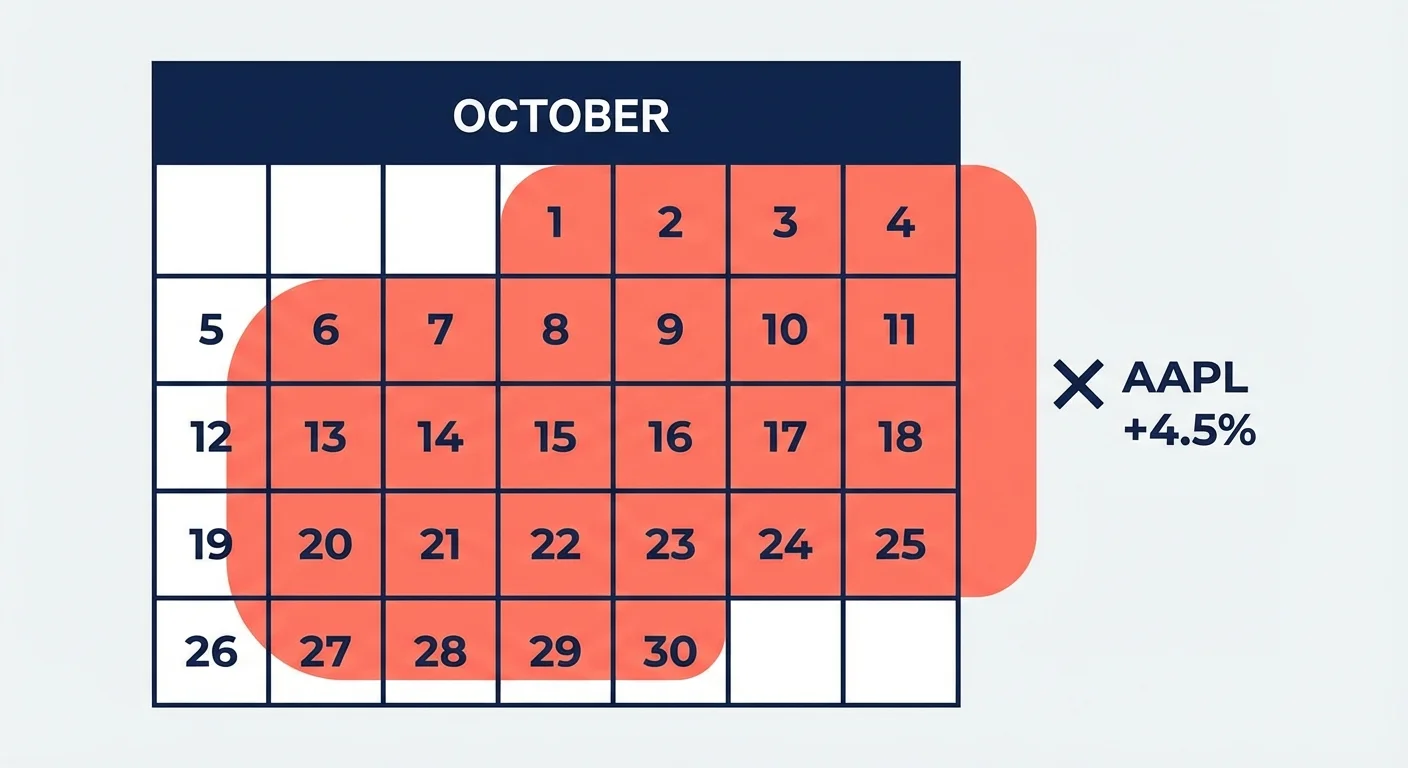
The IRS created the “Wash Sale Rule” specifically to prevent investors from selling a security just to claim a tax loss and then immediately buying it back. This rule is the most common pitfall for DIY investors. A wash sale occurs if you sell a security at a loss and, within 30 days before or after the sale, you:
- Buy the same security.
- Buy a “substantially identical” security.
- Acquire a contract or option to buy that security.
- Purchase the security in a retirement account (like an IRA) even if you sold it in a taxable account.
If you trigger a wash sale, the IRS disallows the loss for the current tax year. Instead, they add the loss to the cost basis of the new security you purchased. You eventually get the tax benefit when you sell the new security, but you lose the immediate tax break you were counting on for this year. For more detailed information on these regulations, visit the IRS Publication 550 on Investment Income and Expenses.
The Power of Offsetting Ordinary Income
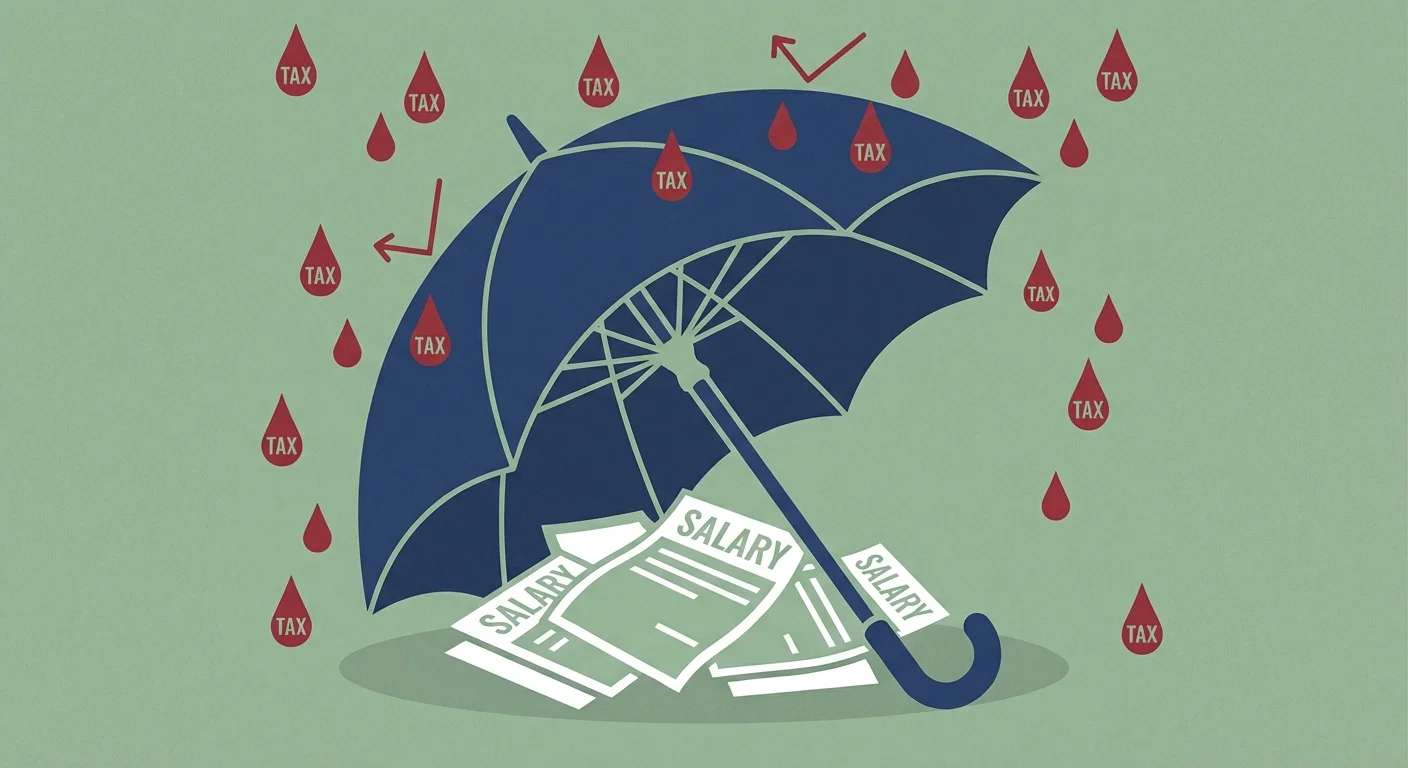
The most compelling part of this strategy for many retirement savers isn’t just offsetting gains—it’s offsetting their paycheck. If your total losses for the year are greater than your total gains, the IRS allows you to use the remaining loss to offset up to $3,000 of your “ordinary income.” This includes your salary, wages, and interest income.
Consider an investor in the 24% tax bracket. By harvesting $3,000 in losses beyond their gains, they reduce their taxable income by $3,000, resulting in a direct tax saving of $720 ($3,000 x 0.24). That $720 can then be funneled back into a Roth IRA or an emergency fund, further strengthening their financial security.
What Happens to Excess Losses?
If you have $10,000 in net losses, you use $3,000 this year and “carry forward” the remaining $7,000 to future years. These carried-over losses never expire. You can use them year after year until they are exhausted. This creates a “tax bank” that protects your future gains from being taxed.

Comparing Capital Gains Tax Rates
To maximize the value of your harvested losses, you need to understand which gains you are offsetting. The IRS classifies gains and losses as either short-term or long-term. This distinction is vital because they are taxed at significantly different rates.
| Gain/Loss Type | Holding Period | Tax Rate (2024-2026) |
|---|---|---|
| Short-Term | 1 Year or Less | Taxed as Ordinary Income (Up to 37%) |
| Long-Term | More than 1 Year | 0%, 15%, or 20% (Based on Income) |
When you harvest losses, the IRS applies them in a specific order. First, short-term losses offset short-term gains. Second, long-term losses offset long-term gains. If you have excess losses in one category, they can then be used to offset gains in the other category. Because short-term gains are taxed at much higher ordinary income rates, harvesting losses to offset them is typically more valuable than offsetting long-term gains.

Strategic Coordination with Retirement Goals
Tax-loss harvesting is not just a year-end chore; it is a year-round strategy that supports your retirement. Here is how you can use these savings to accelerate your journey to financial independence.
1. Rebalancing Your Portfolio
Over time, your portfolio’s asset allocation will drift. If stocks perform well, they might make up 80% of your portfolio when your target was 70%. Normally, selling those stocks to rebalance would trigger capital gains taxes. However, if you have harvested losses earlier in the year, you can sell your winners and use those losses to “wash” the gains. This allows you to rebalance for free, maintaining your desired risk level without a tax penalty.
2. Funding Your Roth Conversion
If you are considering a Roth IRA conversion—moving money from a Traditional IRA to a Roth IRA to enjoy tax-free growth—you must pay ordinary income tax on the converted amount. By harvesting $3,000 in net losses in your taxable account, you lower your overall taxable income, which could potentially keep you in a lower tax bracket during the conversion year or simply reduce the total tax bill for the move.
3. Managing the “Net Investment Income Tax” (NIIT)
Higher-income earners may be subject to an additional 3.8% tax on investment income if their Modified Adjusted Gross Income (MAGI) exceeds certain thresholds ($200,000 for individuals, $250,000 for married filing jointly). Tax-loss harvesting reduces your net investment income, which can help you stay below these thresholds or reduce the amount subject to this surtax.
“The investor’s chief problem—and even his worst enemy—is likely to be himself.” — Benjamin Graham, Author of The Intelligent Investor
Avoiding Common Errors
While the concept is simple, the execution is where many investors stumble. Avoid these common mistakes to ensure your strategy remains IRS-compliant.
- The Dividend Reinvestment Trap: If you sell a stock at a loss in your taxable account but have “automatic dividend reinvestment” turned on for that same stock in your IRA, you might inadvertently trigger a wash sale. If the IRA reinvests a dividend within 30 days of your sale, the loss in your taxable account is disallowed. Disable automatic reinvestments during the months you plan to harvest losses.
- Forgetting the Spouse’s Accounts: The IRS views a married couple as a single entity for wash sale rules. If you sell a security at a loss and your spouse buys it in their own account within 30 days, it is a wash sale.
- Waiting Until December 31st: Market volatility happens all year. If a significant dip occurs in June, harvest the loss then. If you wait until the end of the year, the market might have recovered, and your “loss” might have evaporated.
- Focusing Only on Taxes: Never let the “tax tail wag the investment dog.” If you sell a high-quality asset just for the tax break and the market rallies while you are sitting in a sub-par replacement, your investment loss could far exceed your tax savings.

When DIY Isn’t Enough
For many investors, a simple strategy of selling one index fund and buying another is manageable. However, certain scenarios require professional guidance from a CPA or a Certified Financial Planner (CFP). You should consider seeking help if:
- You have complex equity compensation: If you hold Incentive Stock Options (ISOs) or Restricted Stock Units (RSUs), the tax interplay between capital gains and the Alternative Minimum Tax (AMT) is complex.
- You are in a very high tax bracket: When you are dealing with the 37% federal bracket plus high state taxes, the math of tax-loss harvesting becomes more nuanced, requiring a detailed “tax-alpha” calculation.
- You are retired and drawing income: Coordinating losses with Social Security taxation and Medicare Part B premiums (IRMAA) requires a holistic view of your tax return.
- You hold “substantially identical” securities across multiple platforms: If you use multiple brokerages or robo-advisors, tracking wash sales across all accounts is difficult to do manually.
For resources on finding a qualified professional, the CFP Board offers a search tool to find planners in your area.

Practical Example: The $4,500 Tax Win
Let’s look at how this works in a real-world scenario. Imagine you are a married couple filing jointly with a household income of $150,000. This puts you in the 15% long-term capital gains bracket.
Earlier this year, you sold some individual tech stocks to buy a home, realizing a $10,000 long-term capital gain. Without any intervention, you would owe $1,500 in federal taxes on those gains ($10,000 x 0.15).
In November, the market dips, and an international fund in your taxable brokerage account is now worth $13,000 less than you paid for it. You sell that fund, immediately realizing a $13,000 loss. You then take that cash and buy a similar international ETF to keep your diversification.
The Result:
1. Your $13,000 loss first cancels out your $10,000 gain. Your capital gains tax drops from $1,500 to $0.
2. You have $3,000 in “excess” losses remaining. You use this to offset $3,000 of your salary.
3. Since you are in the 22% ordinary income tax bracket, this saves you an additional $660 on your income tax bill ($3,000 x 0.22).
4. Total Savings: $2,160 in taxes that stays in your pocket instead of going to the IRS.
By simply clicking “sell” and “buy” on the same day, you effectively gifted yourself over $2,000 toward your retirement fund.
Frequently Asked Questions
Can I harvest a loss if I still believe in the company?
Yes. You simply need to wait 31 days before buying the stock back to avoid the wash sale rule. Alternatively, you can buy a “proxy” security (like an industry-specific ETF) for those 31 days so you don’t miss out on any upward movement in that sector.
Does tax-loss harvesting make sense if I am in the 0% capital gains bracket?
Generally, no. If your income is low enough that your capital gains rate is already 0% (less than $94,050 for married couples in 2024), there is no “gain” to offset. In fact, you might prefer “tax-gain harvesting,” where you sell winners to lock in gains at a 0% rate and then immediately buy them back to reset your cost basis higher.
What is the difference between “realized” and “unrealized” losses?
An unrealized loss is a decline in the value of an asset you still own. It exists only on your screen. A realized loss occurs the moment you sell the asset. The IRS only cares about realized losses.
Can I use losses from my taxable account to offset a withdrawal from my 401(k)?
Yes. Since 401(k) withdrawals are taxed as ordinary income, if you have a net capital loss for the year (after offsetting all gains), you can use up to $3,000 of that loss to reduce the taxable amount of your 401(k) distribution.
Moving Forward with Your Strategy
Tax-loss harvesting is one of the few ways the tax code actually works in favor of the individual investor during a market downturn. It allows you to find value in your losses and use them to fortify your retirement nest egg. To get started, take a look at your taxable brokerage account today. Identify any positions that are currently “in the red” and evaluate whether a sale makes sense within your broader investment strategy.
Remember that the goal of investing is to maximize your after-tax returns, not just your gross returns. By keeping more of your money away from the IRS through smart strategies like tax-loss harvesting, you allow the power of compounding to work on a larger sum of money. Over a 20 or 30-year retirement horizon, these small annual tax savings can grow into a significant portion of your total wealth. For further reading on managing your portfolio, resources like Investor.gov provide excellent tools for understanding market basics.
This article provides general financial education and information only. Everyone’s financial situation is unique—what works for others may not work for you. For personalized advice, consider consulting a qualified financial professional such as a CFP or CPA.
Last updated: February 2026. Financial regulations and rates change frequently—verify current details with official sources.









Leave a Reply