
According to AAA, the average cost to own and operate a new vehicle in 2023 reached $12,182 per year. While fuel and depreciation eat up a massive chunk of that budget, maintenance and repair costs often catch drivers off guard. A single trip to the dealership for a “routine” 30,000-mile service can easily exceed $600—much of which goes toward labor costs and marked-up parts. However, you do not need to be a master mechanic to reclaim control over your vehicle expenses. By mastering frugal car maintenance, you can keep hundreds of dollars in your pocket while ensuring your car remains reliable for the long haul.
The secret to building financial security is not just about earning more; it is about plugging the leaks in your monthly budget. When you perform your own DIY auto maintenance, you avoid the “convenience tax” that shops charge for simple labor. Most of these tasks require nothing more than 15 minutes of your time and basic tools you likely already own. Over the course of a year, these small wins compound into significant savings that you can redirect toward your high-yield savings account or retirement fund.

The Financial Impact of DIY Maintenance
Before diving into the mechanical steps, consider the math behind the savings. Mechanic labor rates currently range from $100 to $200 per hour depending on your location and the type of vehicle you drive. Dealerships often use a “flat rate” manual, meaning they charge you for a full hour of labor even if the task only takes their technician 10 minutes to complete. When you buy your own parts from a local auto parts store or a reputable online retailer, you also avoid the 20% to 50% markup typically added by repair shops.
“You have to work at it. You have to be proactive. If you don’t manage your money, your money will manage you.” — Dave Ramsey, Personal Finance Author and Expert
Taking a proactive approach to your vehicle’s health prevents minor issues from escalating into catastrophic failures. A $20 air filter today prevents a $200 mass airflow sensor cleaning tomorrow. In this guide, we will break down the five most effective ways to save money on car repairs through simple, hands-on tasks.
What You’ll Learn
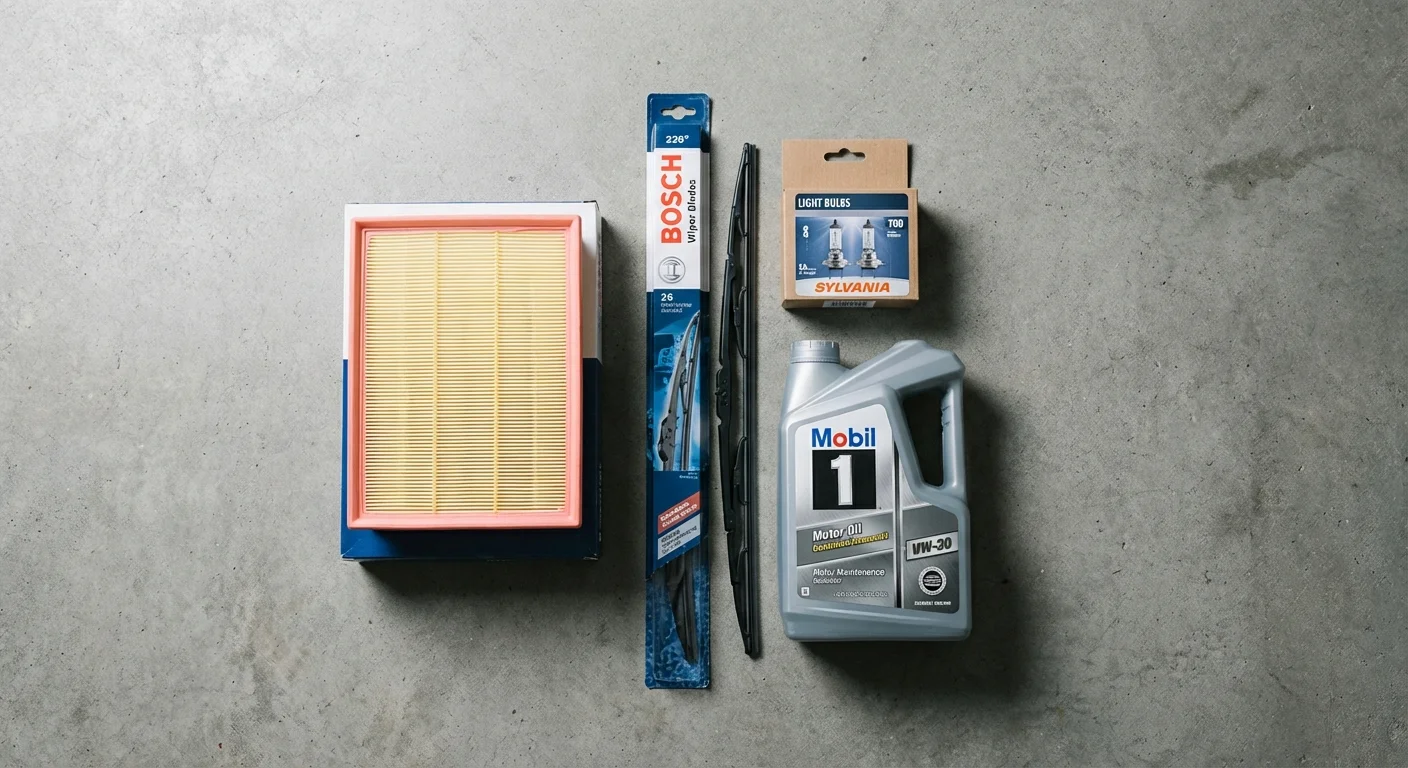
- How to replace your engine and cabin air filters in under 10 minutes.
- The simple trick to changing windshield wipers without scratching your glass.
- Ways to identify and replace dead light bulbs to avoid costly traffic tickets.
- A step-by-step guide to performing your own oil changes safely.
- Strategies for sourcing the best parts at the lowest prices.
1. Replacing Your Engine Air Filter
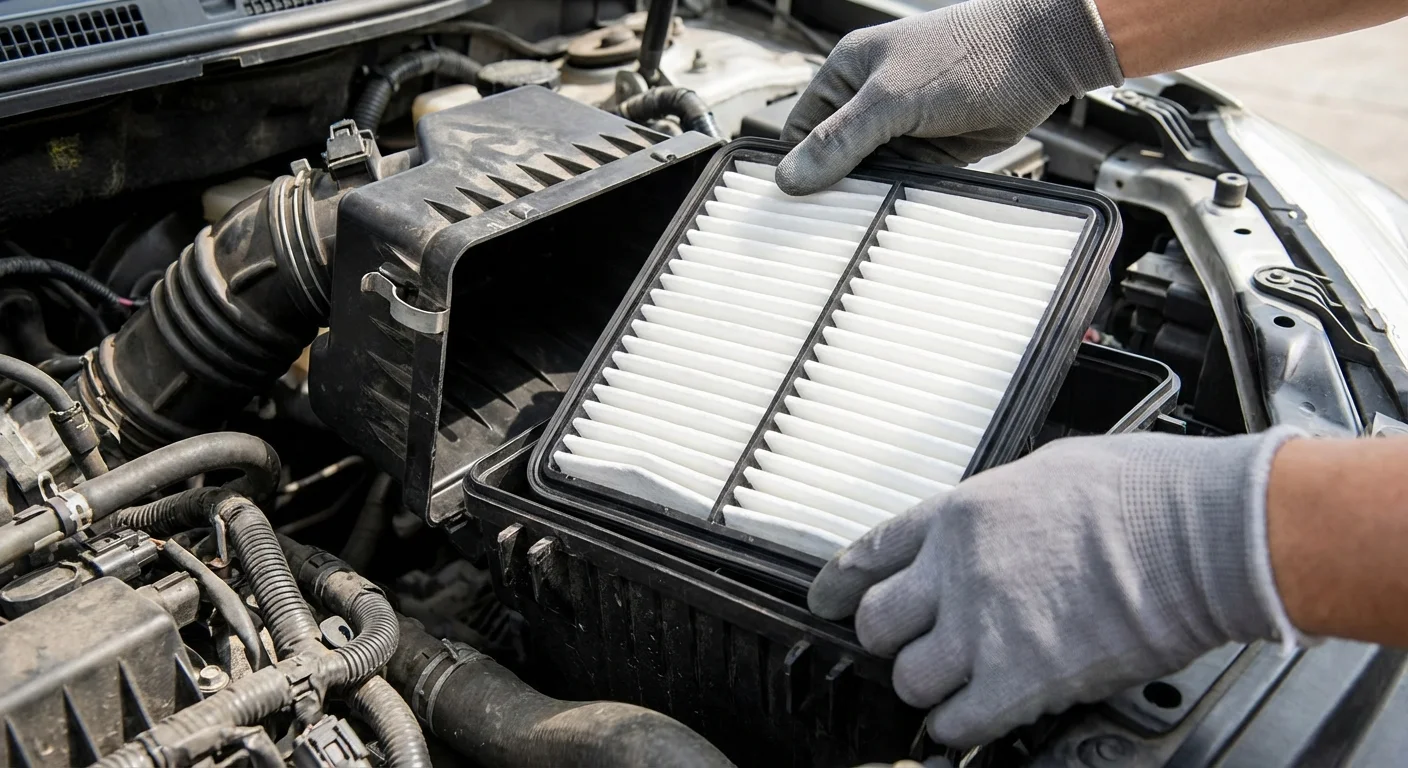
Your engine breathes just like you do. An engine air filter prevents dust, dirt, and debris from entering the combustion chamber. Over time, this filter becomes clogged, forcing your engine to work harder to draw in air. While modern fuel-injected engines are efficient, a severely restricted filter can still lead to reduced acceleration and increased wear on internal components. Most shops charge between $50 and $100 for this service, but the filter itself usually costs between $15 and $25.
To replace it, locate the large plastic box under your hood—it usually has a thick black hose attached to it. Most modern vehicles use simple metal clips or a few screws to hold the housing closed. Pop the clips, lift the lid, and take a mental note of how the old filter is seated. Pull it out, drop the new one in exactly the same orientation, and re-fasten the clips. You have just saved roughly $40 in labor for three minutes of work.

2. Swapping Out Cabin Air Filters
While the engine filter protects the car, the cabin air filter protects you. This filter cleans the air coming through your HVAC system, removing pollen, dust, and mold spores. If your car has a faint musty smell or the defroster does not seem as powerful as it used to be, your cabin filter is likely the culprit. Dealerships are notorious for charging $70 or more for this replacement, often labeling it as a “premium HVAC service.”
In 90% of vehicles, the cabin air filter is located directly behind the glove box. You can usually release the glove box by pressing in the sides or unscrewing a small plastic dampener arm. Once the glove box hangs down, you will see a small rectangular plastic door. Snap it open, slide the old filter out, and slide the new one in. Make sure the “Air Flow” arrow on the new filter points in the same direction as the one you removed. This task is so simple that many drivers feel a sense of frustration when they realize how much they have paid for it in the past.
3. Installing New Windshield Wiper Blades
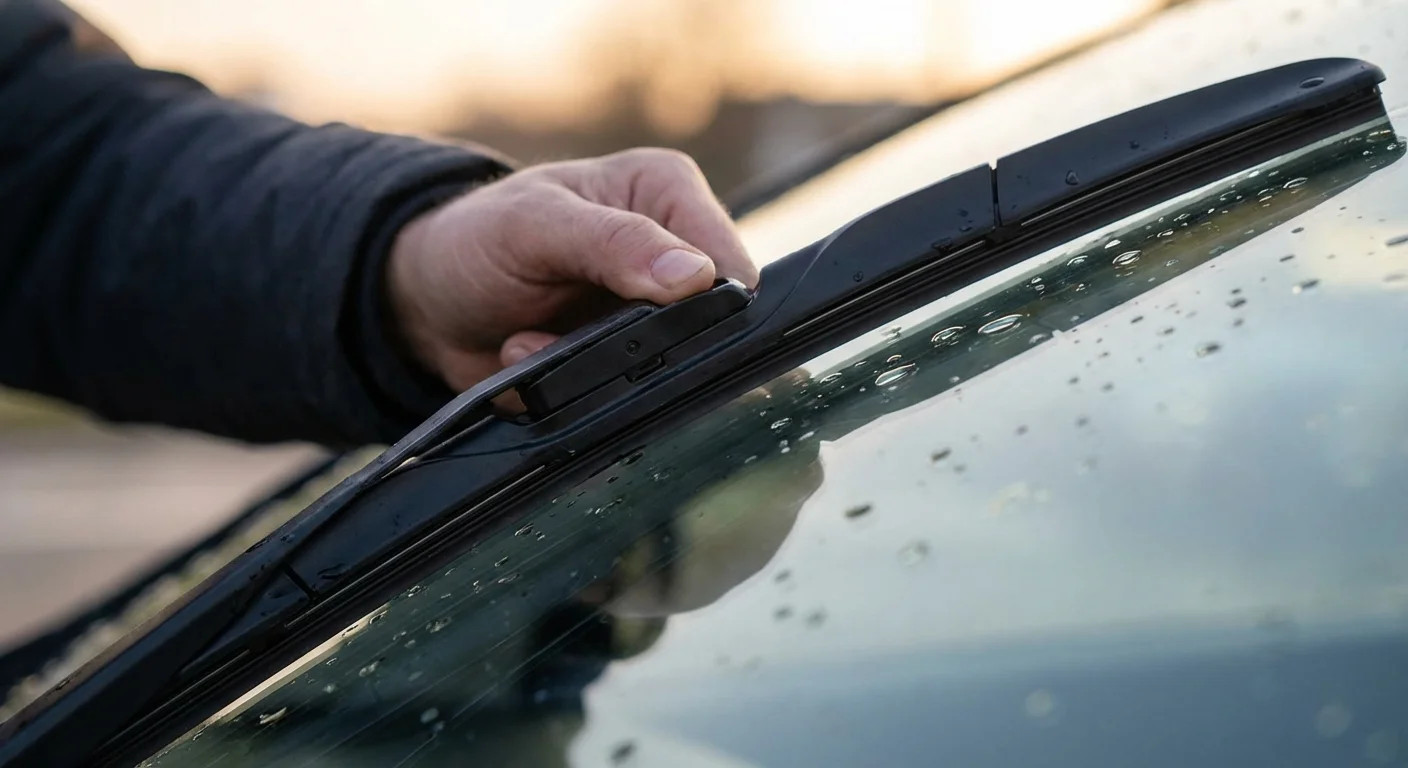
Visibility is the most critical safety feature of your car. Streaking or chattering wipers are not just annoying; they are dangerous during a heavy downpour. Most drivers wait until they can no longer see through the rain to replace their blades, often paying a premium at a gas station or repair shop for a quick fix. A shop will typically charge you the full retail price of the blades plus a $10 to $20 “installation fee.”
When you buy blades yourself, you can choose higher-quality silicone options that last twice as long as standard rubber blades for the same price. Most blades use a “J-hook” or a “side-pin” connector. The key to a successful DIY installation is to place a folded towel on your windshield before you begin. If the metal wiper arm accidentally snaps back down without a blade attached, it can crack your windshield instantly—a mistake that would cost hundreds of dollars to fix. With the towel in place, press the small tab on the old blade, slide it off, and click the new one into place.

4. Replacing Interior and Exterior Bulbs
A burnt-out headlight or taillight is an invitation for a law enforcement officer to pull you over. Beyond the safety risk, the resulting ticket can cost significantly more than the bulb itself. Shops often charge a half-hour of labor to replace a simple bulb because they have to “access the assembly.” In reality, most bulbs are accessible by simply reaching behind the headlight housing or removing a few plastic clips in the trunk lining.
Check your owner’s manual for the specific bulb size (such as H11 or 7443). When handling new halogen bulbs, never touch the glass with your bare fingers. The oils from your skin can create a “hot spot” on the glass, causing the bulb to shatter or burn out prematurely. Use a clean paper towel or gloves. Twist the old socket counter-clockwise, pull it out, swap the bulb, and twist it back in. This $10 fix saves you from a $150 repair bill and a potential increase in your insurance premiums due to a mechanical violation ticket.
5. Performing Your Own Oil Change
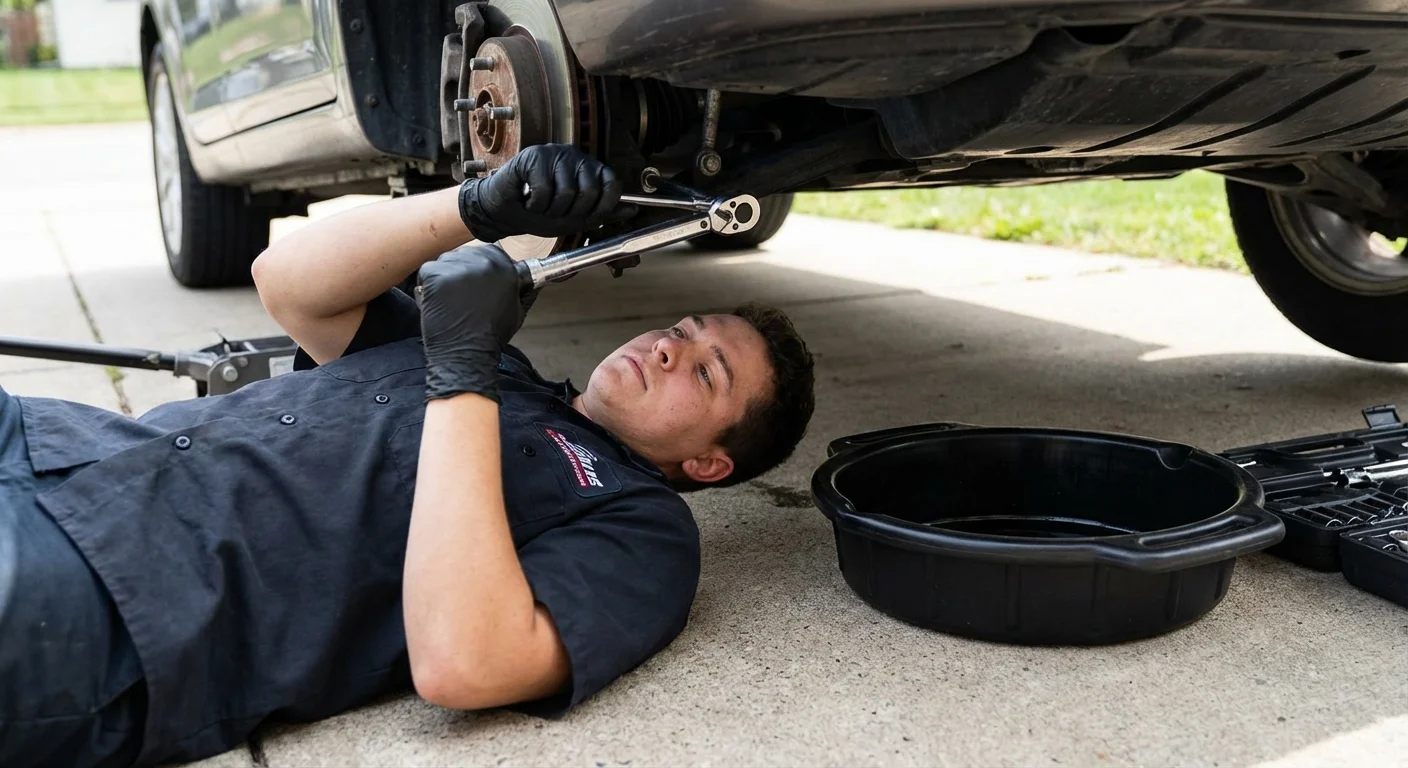
This is the “holy grail” of frugal car maintenance. While it requires a few more tools than the other tasks—specifically a jack, jack stands, an oil filter wrench, and a drain pan—the long-term savings are massive. More importantly, doing it yourself ensures the job is done correctly. Quick-lube shops are famous for over-tightening drain bolts or using the cheapest possible filters to save a nickel.
By doing it yourself, you can use high-quality full synthetic oil and a premium filter for about $40. A dealership will easily charge $80 to $120 for a synthetic oil change. If you drive 15,000 miles a year and change your oil every 5,000 miles, doing it yourself saves you up to $240 annually just on this one task. Always ensure the vehicle is securely supported on jack stands—never rely solely on a hydraulic jack while you are underneath the car. Once the oil drains, replace the crush washer on the drain plug, swap the filter, and refill the engine with the exact amount specified in your manual. Remember to dispose of your used oil at a local auto parts store; most will take it for free as part of an environmental recycling program.
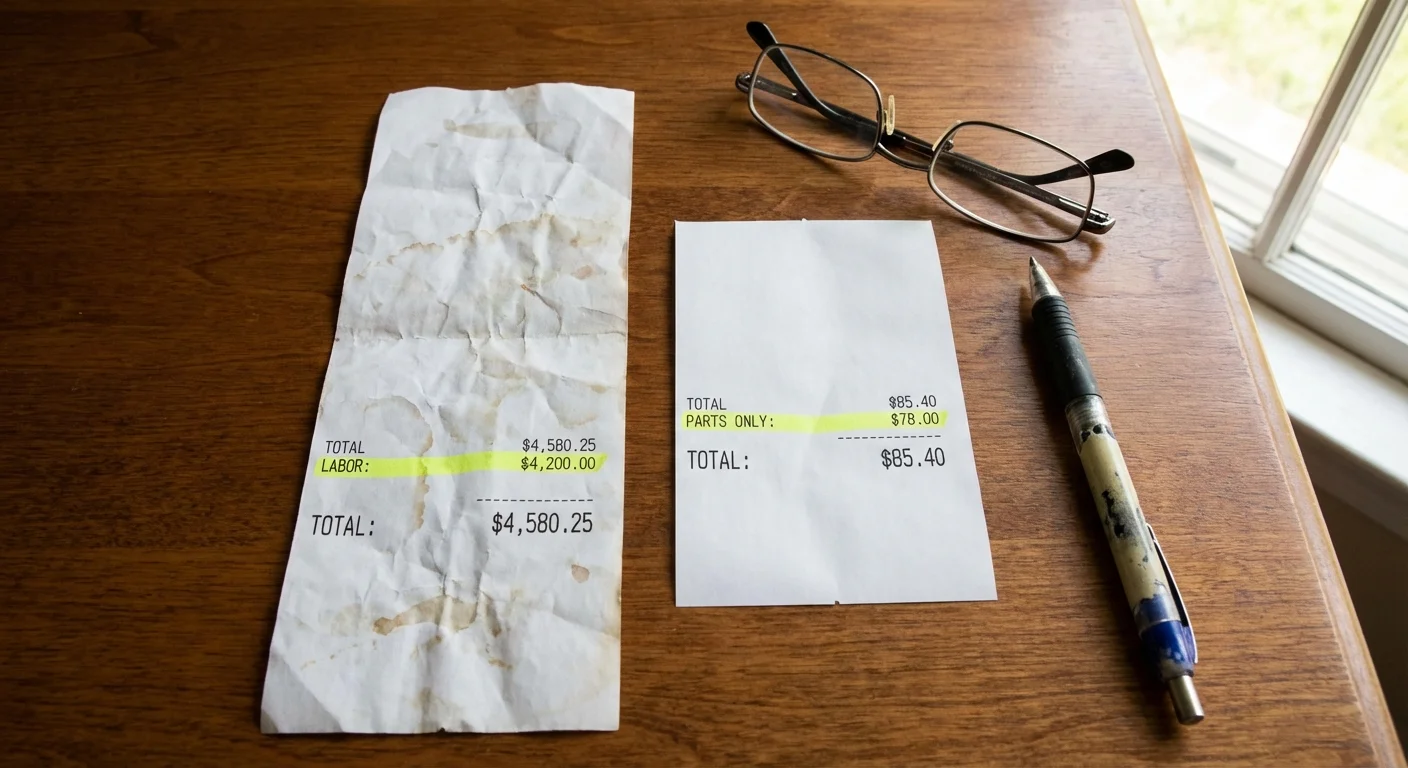
Comparison of DIY vs. Professional Costs
The following table illustrates the typical savings for an average sedan over the course of one year. Prices are estimates based on national averages for mid-range parts and standard shop labor rates.
| Maintenance Task | Estimated Shop Cost | Estimated DIY Cost | Annual Savings |
|---|---|---|---|
| Engine Air Filter (1x) | $65 | $20 | $45 |
| Cabin Air Filter (1x) | $80 | $18 | $62 |
| Wiper Blades (Set) | $75 | $35 | $40 |
| Synthetic Oil Change (3x) | $300 | $120 | $180 |
| Headlight Bulb (1x) | $90 | $15 | $75 |
| TOTAL | $610 | $208 | $402 |
Note that these savings do not even account for the time spent driving to the shop and waiting in a lobby. When you value your time at a reasonable hourly rate, the DIY approach becomes even more attractive. Furthermore, you can use resources like Consumer Reports to find the most reliable brands for replacement parts, ensuring your DIY work lasts as long as possible.
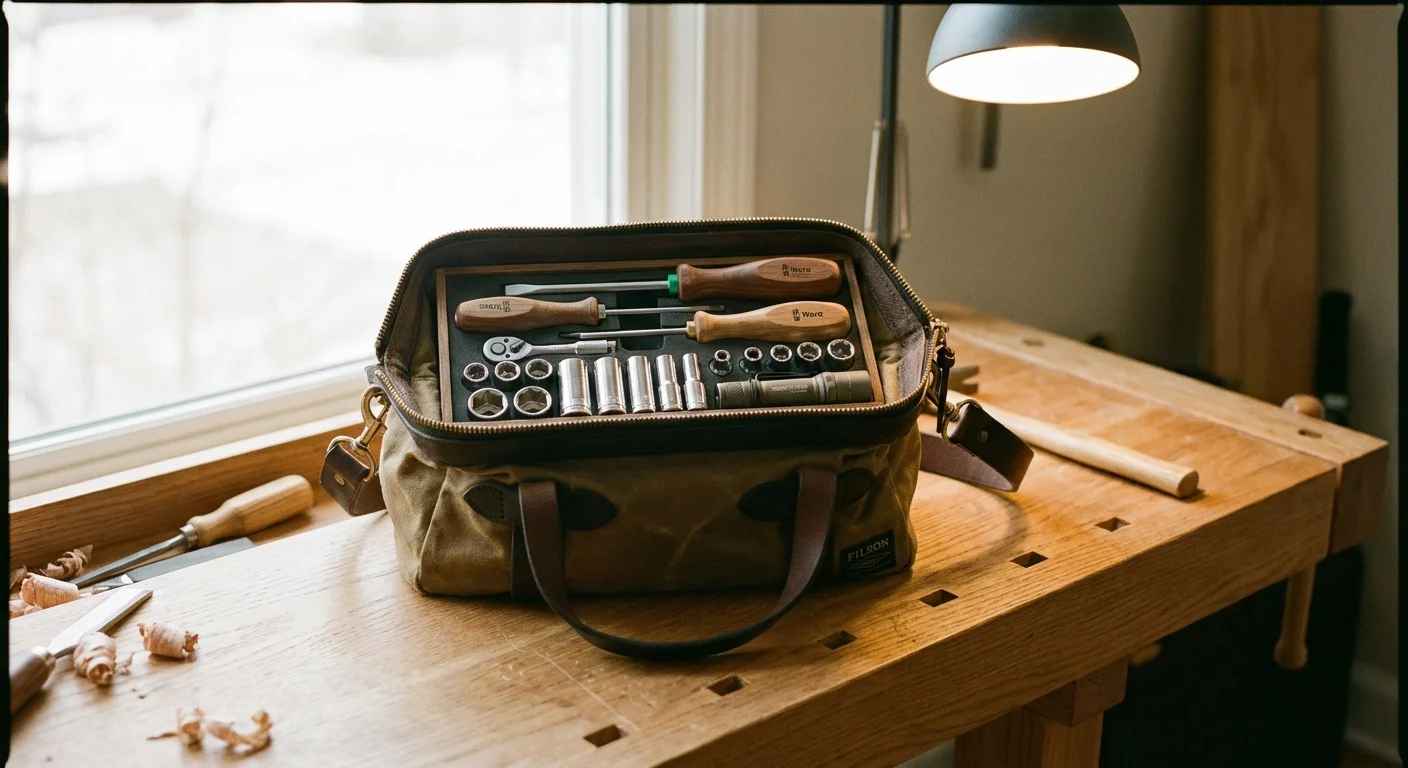
The Frugal Tool Kit: A One-Time Investment
To maximize your savings, you need the right tools. However, do not fall into the trap of buying a massive, expensive tool chest all at once. For most DIY auto maintenance, you only need a few essentials:
- Socket Set: A basic 3/8-inch drive set with both metric and standard sizes.
- Screwdrivers: A multi-bit driver with Phillips and flat-head tips.
- Pliers: A pair of needle-nose and adjustable slip-joint pliers.
- Drain Pan and Funnel: Essential for oil changes to prevent messy spills.
- Flashlight: A bright LED headlamp is best for hands-free work in dark engine bays.
Buying these tools might cost you $100 upfront, but they will pay for themselves within the first two tasks you complete. View this as a capital investment in your financial future rather than a chore-related expense.
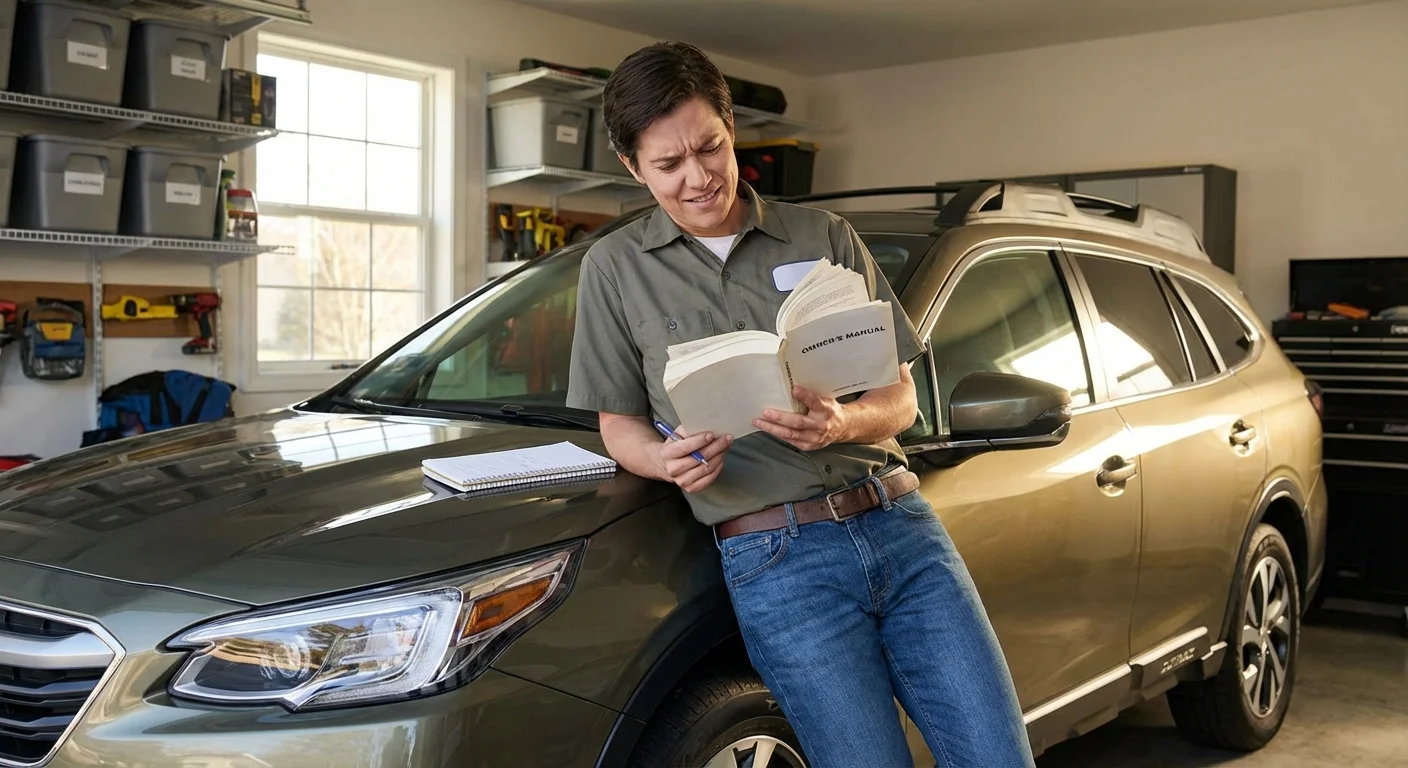
What Can Go Wrong
While these tasks are simple, every DIY project carries a small amount of risk. Understanding these risks helps you avoid the “stupid tax” of fixing a mistake you made while trying to save money.
Stripped Threads: One of the most common mistakes is “cross-threading” a bolt or a spark plug. Always start threading bolts by hand. If you feel resistance after only a half-turn, back it out and try again. Never force a bolt with a wrench until it is already threaded in significantly by hand.
Overtightening: More is not always better. Overtightening a plastic air filter housing can crack it, and over-torquing an oil drain plug can strip the threads on your oil pan—a repair that costs hundreds of dollars. Use “snug” as your guide; you don’t need to put your full body weight into every bolt.
The Wrong Parts: There is nothing more frustrating than having your car apart only to realize the filter you bought doesn’t fit. Always double-check your vehicle’s year, make, model, and engine size. Many auto parts websites allow you to enter your VIN (Vehicle Identification Number) to guarantee a perfect fit.
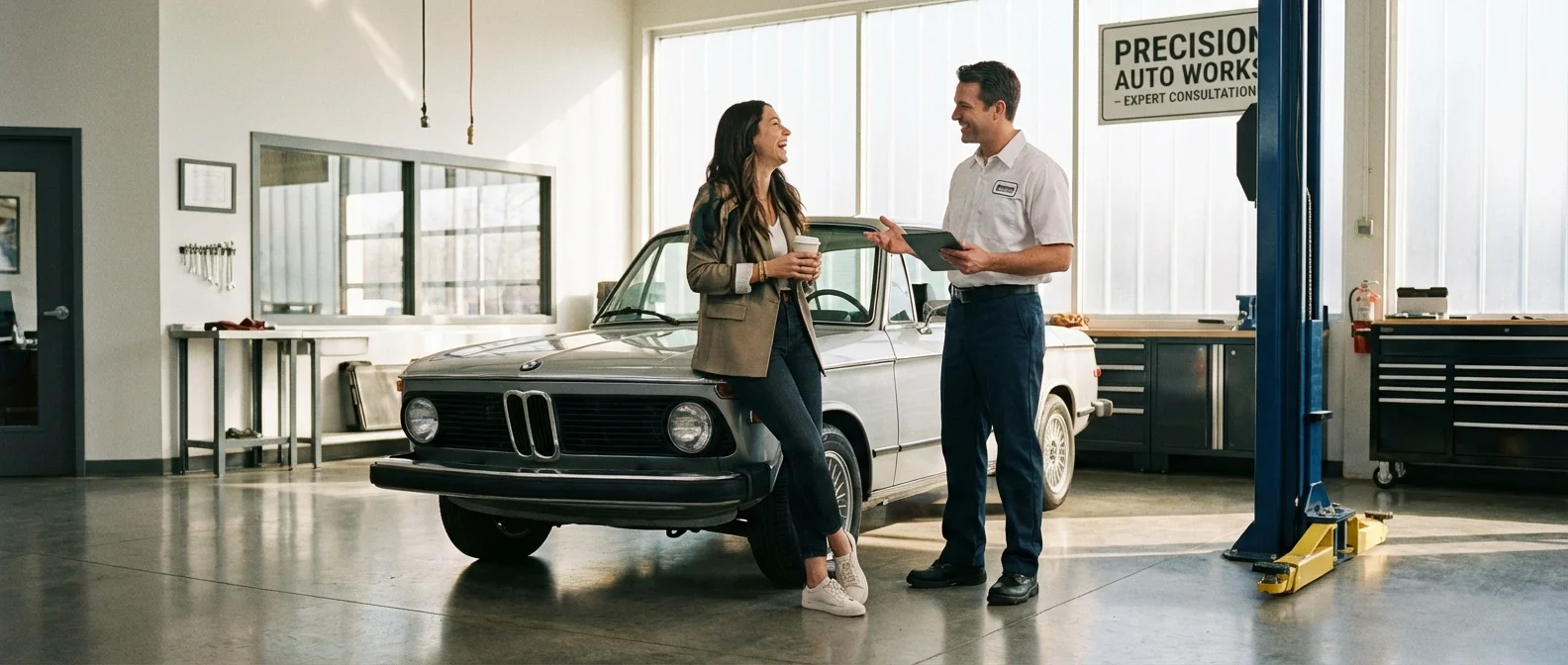
When to Consult a Professional
Part of being financially savvy is knowing when a DIY attempt might actually cost you more in the long run. Some systems are too complex or dangerous for a beginner to tackle in a driveway.
Brake Systems: While changing brake pads is a common DIY task for intermediate hobbyists, the braking system is your car’s most vital safety feature. If you feel a “spongy” pedal or see a warning light, and you are not confident in bleeding hydraulic lines, take it to a pro. You can find guidance on managing these costs through resources like the Consumer Financial Protection Bureau (CFPB), which offers advice on navigating large, unexpected expenses.
Electrical Gremlins: Modern cars are rolling computers. If your dashboard looks like a Christmas tree with flashing lights, or if you have a parasitic battery drain, diagnosing the issue requires specialized scanners and electrical diagrams. Guessing by replacing random sensors is an expensive way to fail.
Internal Engine or Transmission Work: If a task requires taking the “head” off the engine or dropping the transmission, it usually requires specialized heavy equipment and extreme precision. These are high-stakes repairs where a small error can result in a total engine loss.
Frequently Asked Questions
Will doing my own maintenance void my factory warranty?
No. In the United States, the Magnuson-Moss Warranty Act protects consumers. A manufacturer cannot legally void your warranty just because you performed your own maintenance or used an aftermarket part, provided the part is of equal quality and the work was done correctly. Just keep your receipts for parts as proof that the maintenance was performed.
How do I find the specific instructions for my car?
YouTube is an incredible resource for DIY auto maintenance. Search for your specific year, make, and model followed by the task (e.g., “2018 Toyota Camry cabin air filter replacement”). Seeing someone else do it on the exact same vehicle builds confidence and reveals any hidden clips or tricks.
Is DIY maintenance messy?
It doesn’t have to be. For filters and bulbs, your hands will stay relatively clean. For oil changes, wearing disposable nitrile gloves and using a large piece of cardboard under your drain pan will keep your driveway and your skin clean.
Where is the best place to buy parts?
For the best prices, online retailers like RockAuto or Amazon often beat local stores. However, if you need a part today, local chains like AutoZone or O’Reilly provide the convenience of immediate pickup and will often help you test your battery or check an engine code for free.
Taking the First Step Toward Automotive Independence
Financial freedom is built on a foundation of competence and resourcefulness. By taking over these five simple car maintenance tasks, you are doing more than just saving $500 a year; you are developing a “DIY mindset” that will serve you in every area of homeownership and personal finance. The money you save today, when invested wisely, can grow into a significant nest egg over time.
Start small. This weekend, go out to your car and simply locate the engine air filter and the cabin air filter. Open the housings, look at the filters, and see for yourself how accessible they are. Once you realize how easy it is to maintain your own vehicle, you will never look at a dealership’s “service menu” the same way again. Your car—and your bank account—will thank you.
This article provides general financial education and information only. Everyone’s financial situation is unique—what works for others may not work for you. For personalized advice, consider consulting a qualified financial professional such as a CFP or CPA.
Last updated: February 2026. Financial regulations and rates change frequently—verify current details with official sources.









Leave a Reply