You wake up to the rhythmic sound of dripping water, only to find a burst pipe has turned your kitchen into a shallow pond. Moments later, you realize your car needs a new transmission, or perhaps a sudden layoff notice lands in your inbox. In these high-stress moments, the math of your bank account becomes painfully clear. If you have been funneling every extra cent into your credit card balances to save on interest, you might find yourself with a $0 balance but also $0 in cash to handle the crisis. This creates a vicious cycle where you must charge the repair to the very card you just paid off, often at a higher interest rate than before.
Deciding whether to save or pay off debt remains one of the most debated topics in personal finance. On one side, the mathematicians argue that paying down a 24% APR credit card is a guaranteed “return” on your money that no savings account can beat. On the other side, behavioral experts argue that without a cash cushion, you are always one flat tire away from financial ruin. Navigating this financial priorities guide requires you to look beyond simple spreadsheets and account for the unpredictability of real life.

The Statistical Reality of Financial Emergencies
The need for a cash buffer is not just a theoretical suggestion; it is a statistical necessity for modern American life. According to the Federal Reserve’s most recent report on the Economic Well-Being of U.S. Households, approximately 37% of adults would not cover a hypothetical $400 emergency expense exclusively using cash or its equivalent. Instead, these individuals would rely on credit cards, loans from family, or selling assets to bridge the gap.
When you prioritize debt repayment to the total exclusion of savings, you essentially use your credit limit as your emergency fund. This strategy carries significant risks. Credit card companies can lower your credit limit without notice, especially during economic downturns, leaving you with no access to funds when you need them most. Furthermore, paying for an emergency with high-interest debt compounded over months can cost you far more than the interest you “saved” by paying down the balance early.

Categorizing Your Debt: Not All Balances Are Equal
Before you decide where to send your next $500, you must categorize your debt into three distinct buckets. Understanding the “temperature” of your debt helps you determine how aggressively you should attack it versus building your savings.
- Toxic Debt (High Priority): Any debt with an interest rate above 10-12%. This includes credit cards, payday loans, and some private student loans. The interest on these balances compounds so quickly that it can easily outpace your ability to save.
- Necessary Debt (Medium Priority): Debt with moderate interest rates, typically between 5% and 9%. This might include personal loans or newer auto loans. You should pay these according to the schedule, but they don’t necessarily constitute a “financial hair-on-fire” emergency.
- Low-Interest Debt (Low Priority): Debt with rates below 5%, such as many mortgages or older federal student loans. Because the interest rate is often lower than the rate of inflation or the yield on a high-yield savings account (HYSA), there is rarely a mathematical reason to pay these off early at the expense of an emergency fund.

The Case for the Starter Emergency Fund
Most financial experts recommend a “starter” emergency fund before you begin an aggressive debt-crushing campaign. This is not the full three-to-six months of expenses typically recommended for long-term stability; rather, it is a small buffer designed to keep you from reaching for the plastic when life happens.
“An emergency fund is not an investment; it is an insurance policy. You don’t look for a return on your insurance; you look for protection.” — Dave Ramsey, Personal Finance Author and Host
For most households, a starter fund of $1,000 to $2,000 is sufficient to cover common hiccups like a deductible for an insurance claim, a minor dental procedure, or a basic car repair. If your income is volatile—for example, if you are a freelancer or work on commission—you should aim for one full month of essential living expenses before shifting your focus to debt.

Comparing the Math: Cost of Debt vs. Yield on Savings
To make an informed decision, you must look at the “spread” between what your debt costs and what your savings earn. If you have a credit card with a 22% APR and a savings account earning 4.50%, the mathematical choice is clear: the debt is costing you 17.5% more than the savings are earning you.
| Financial Instrument | Average Interest Rate (2024-2025) | Action Priority |
|---|---|---|
| Credit Card Balance | 21.00% – 28.00% | Immediate (Toxic) |
| High-Yield Savings Account | 4.00% – 5.00% | Foundation (Starter) |
| Standard Auto Loan | 6.00% – 9.00% | Moderate |
| Federal Student Loans | 4.00% – 7.00% | Moderate/Low |
| Fixed-Rate Mortgage | 3.00% – 7.50% | Low |
While the table suggests prioritizing the credit card, remember that math does not account for liquidity. You cannot pay a landlord or a grocery store with “paid-off credit card utility” if the bank decides to freeze your account or if the store only accepts cash/debit. Therefore, you should always maintain the starter fund regardless of the interest rate spread.

The Hybrid Approach: The 50/50 Split
If choosing between an emergency fund vs debt feels like an impossible binary choice, consider the hybrid approach. Instead of putting 100% of your discretionary income toward one goal, you split the difference. If you have $400 extra each month, you put $200 into your high-yield savings account and $200 toward your highest-interest debt principal.
This strategy offers two psychological benefits. First, you see your savings balance grow, which reduces financial anxiety. Second, you see your debt balance shrink, which provides a sense of momentum. This “middle path” is often the most sustainable for people who feel overwhelmed by the sheer scale of their debt. It ensures that by the time you reach a $2,000 savings goal, you have also wiped out a significant portion of your high-interest liability.
When to Prioritize Debt Over Savings
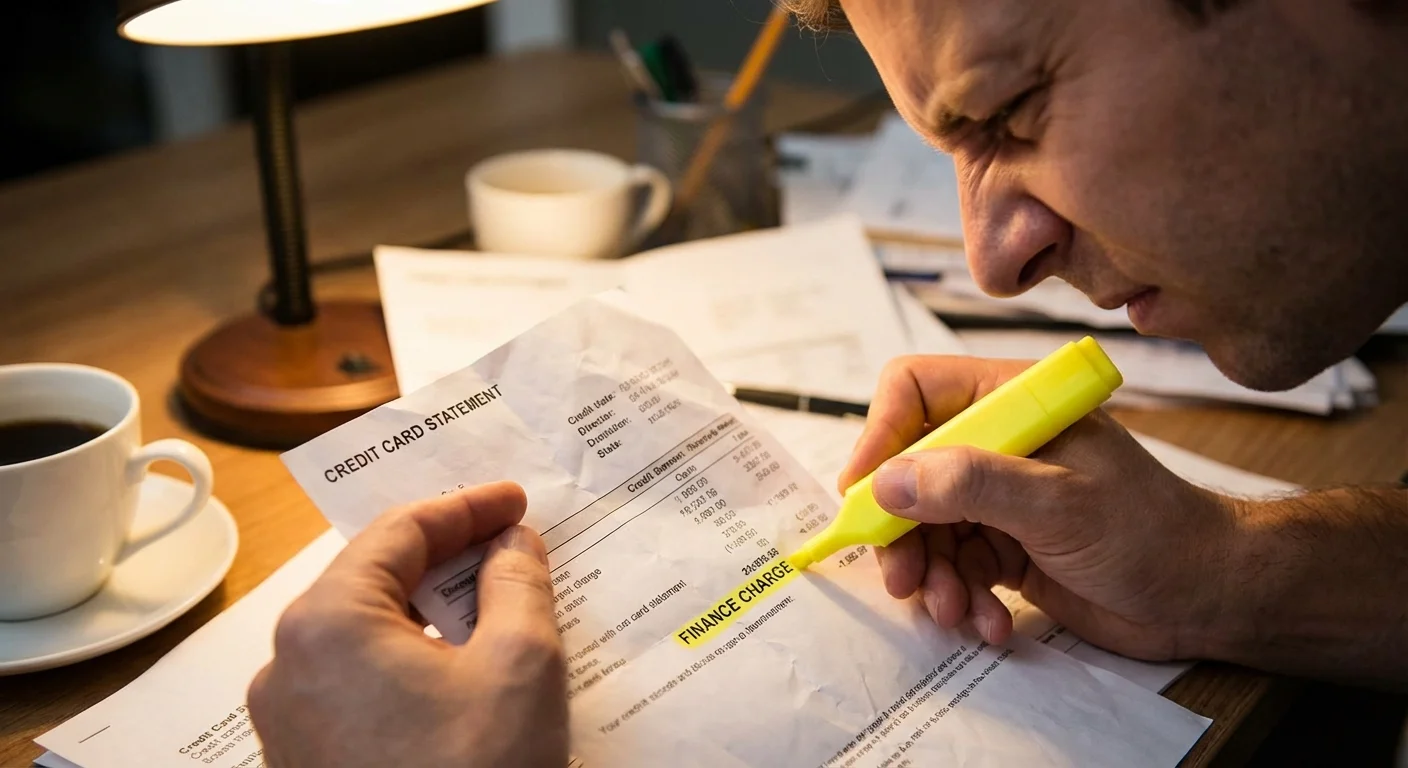
There are specific scenarios where debt repayment should take the driver’s seat. If you have already secured a small cash buffer, you should pivot your focus to debt if:
- The debt is predatory: If you are trapped in a payday loan cycle with annual percentage rates exceeding 100%, every day you carry that balance is a disaster. You can find resources on how to handle these situations at the Consumer Financial Protection Bureau (CFPB).
- Your credit score is preventing essential progress: If high credit utilization is tanking your score and preventing you from renting an apartment or getting a necessary job, paying down the balance can provide an immediate “score boost” that opens more doors than a small savings account would.
- The debt is garnishing your wages: If a creditor has obtained a judgment and is taking money directly from your paycheck, you must resolve that debt immediately to regain control over your cash flow.

The Role of Employer Matching Programs
Before you get too deep into the save or pay off debt debate, check your workplace benefits. If your employer offers a 401(k) match, this is essentially a 100% return on your money. Missing out on an employer match to pay off a 20% credit card is technically a net loss of 80% on those dollars. Most experts agree that you should contribute enough to get the full employer match even while paying down debt, as this is the only “free money” available in the financial world.
You can learn more about how different retirement accounts are regulated and protected through the SEC’s Investor.gov resource. Understanding these protections can help you feel more confident about investing while managing debt.

Common Mistakes to Avoid
Many well-meaning individuals derail their financial progress by falling into these common traps. By identifying them early, you can keep your momentum regardless of which path you choose.
- Using the emergency fund for “predictable” expenses: Your emergency fund is not for Christmas gifts, annual car registrations, or semi-annual insurance premiums. Those are “sinking funds” that should be part of your monthly budget. An emergency is an event that is both unplanned and necessary.
- Cashing out retirement accounts to pay debt: Withdrawing from a 401(k) or IRA early often triggers a 10% penalty plus income taxes. This is usually a very expensive way to pay off debt. Unless you are facing eviction or total insolvency, leave your retirement funds alone.
- Ignoring the behavior that caused the debt: If you pay off your credit cards using your emergency savings but don’t change your spending habits, you will likely end up with zero savings and high debt again within a year.
- Stopping all debt payments to save: You must always pay the minimum balance on every debt. Failing to do so will result in late fees and credit damage that far outweigh any interest earned in a savings account.

Professional vs. Self-Guided: When to Get Help
While many people can manage this balance on their own using apps and spreadsheets, certain situations require a professional eye. You should consider seeking help from a Certified Financial Planner (CFP) or a non-profit credit counselor in the following scenarios:
- Total debt exceeds 50% of your annual income: At this level, simple budgeting may not be enough to reach the finish line in a reasonable timeframe.
- You are considering bankruptcy: If you are contemplating legal action to discharge debt, you need a qualified attorney or a counselor from the National Foundation for Credit Counseling (NFCC).
- You feel paralyzed by the options: If the stress of choosing a strategy prevents you from taking any action at all, a one-time consultation with a fee-only planner can provide the roadmap you need.

Expert Insight on Risk Management
“Risk comes from not knowing what you’re doing.” — Warren Buffett, Chairman and CEO of Berkshire Hathaway
In the context of an emergency fund vs debt, the “risk” is the unknown future. If you pay off debt, you know exactly what you saved in interest. However, if you don’t save, you don’t know the cost of the emergency you can’t pay for. Managing risk means preparing for the unknown even when the math suggests a different path. This is why a balanced approach—building the floor (savings) before finishing the ceiling (debt-free)—is the hallmark of a resilient financial plan.
Frequently Asked Questions
Should I pay off my mortgage or build a six-month emergency fund first?
In almost every case, you should build your full six-month emergency fund before making extra payments on a mortgage. A house is an illiquid asset; you cannot easily pull your equity back out if you lose your job. Cash in a high-yield savings account provides far more security during a crisis than a slightly smaller mortgage balance.
Is $1,000 really enough for a starter emergency fund in 2026?
While $1,000 was the standard advice for decades, inflation has eroded its purchasing power. For many modern families, $2,000 or one full month of essential expenses (rent, utilities, food) is a more realistic starter goal. The goal is to cover the most common “bad day” scenarios without relying on new debt.
What if my debt has a 0% introductory interest rate?
If you are in a 0% APR period, prioritize your emergency fund. Since the debt isn’t costing you anything in interest right now, you can accumulate cash and earn interest on it in a high-yield account. Just ensure you have a plan to pay off the balance before the 0% period expires to avoid deferred interest charges.
Should I use my tax refund to save or pay off debt?
This depends on your current status. If you have no cash in the bank, put at least half of the refund into a starter emergency fund. If your starter fund is already set, use the refund as a “power payment” against your highest-interest toxic debt. You can check the status of your refund and find tax-saving tips at the IRS official website.
Establishing Your Personal Order of Operations
To move forward with confidence, follow this simple sequence of actions. This order of operations balances the psychological need for safety with the mathematical need for growth:
- Cover the Essentials: Ensure your current income covers your rent, food, utilities, and minimum debt payments.
- The Starter Buffer: Save $1,000 to $2,000 in a dedicated savings account. Do not touch this unless it is a true emergency.
- The Employer Match: Contribute just enough to your workplace retirement plan to get every dollar of the company match.
- The Toxic Debt Attack: Use the “Debt Avalanche” (highest interest first) or “Debt Snowball” (smallest balance first) to wipe out all debt with interest rates above 10%.
- The Full Emergency Fund: Once the high-interest debt is gone, expand your savings to cover three to six months of living expenses.
- Long-Term Building: Now, you can focus on paying off medium-interest debt or increasing your retirement contributions.
Taking control of your finances requires you to be both a disciplined accountant and a compassionate protector of your own peace of mind. By building a small buffer first, you break the cycle of dependency on credit and give yourself the breathing room to tackle your debt once and for all. Your future self will thank you for the security you are building today.
This article provides general financial education and information only. Everyone’s financial situation is unique—what works for others may not work for you. For personalized advice, consider consulting a qualified financial professional such as a CFP or CPA.
Last updated: February 2026. Financial regulations and rates change frequently—verify current details with official sources.









Leave a Reply