
Every year, millions of Americans pay professional preparers or software companies to file their taxes, often spending $200 or more for a service they could have received for free. According to the IRS, approximately 70% of taxpayers qualify for free tax preparation through federal programs, yet only a small fraction of eligible filers take advantage of these options. As you prepare for the 2025 tax season, understanding the landscape of free services like VITA and IRS Free File can save you hundreds of dollars that would better serve your emergency fund or retirement accounts.
The financial industry often markets “free” versions of software that eventually lead to hidden fees or upselling for common situations like claiming the Earned Income Tax Credit (EITC) or reporting student loan interest. To avoid these traps, you need to use the official channels established by the government and non-profit organizations. This guide breaks down the eligibility requirements, the filing process, and the specific programs available to help you keep your hard-earned money.

The Essentials: Your Best Free Filing Options
Before diving into the technical details, look at this quick overview of the primary programs available for the 2025 filing season. Most taxpayers will fall into one of these three categories based on their income and comfort level with technology.
- IRS Free File: Best for taxpayers with an Adjusted Gross Income (AGI) of $79,000 or less who are comfortable using guided software on their own.
- VITA (Volunteer Income Tax Assistance): Best for taxpayers earning $64,000 or less, persons with disabilities, or limited English speakers who want a certified human to prepare their return.
- TCE (Tax Counseling for the Elderly): Best for filers aged 60 and older who have questions specific to pensions and retirement-related tax issues.
- IRS Direct File: The newest option, providing a government-run interview-style tool for residents of participating states with relatively simple tax situations.
“In investing, you get what you don’t pay for. Costs matter.” — John Bogle, Founder of Vanguard
Bogle’s famous advice applies just as much to tax preparation as it does to index funds. When you eliminate the cost of filing, you effectively increase your tax refund or decrease your liability. Over a decade, saving $250 a year on tax prep and investing it at a 7% return could leave you with nearly $3,500 extra in your pocket.

IRS Free File: High-Powered Software at No Cost
The IRS Free File program is a public-private partnership between the Internal Revenue Service and the Free File Alliance, a group of industry-leading tax software companies. This program provides you with full-featured tax software that handles complex calculations, state returns (in many cases), and electronic filing.
For the 2025 filing season (covering the 2024 tax year), the income threshold remains at $79,000 of Adjusted Gross Income. If your income falls below this mark, you have access to the same software engines that others pay high premiums for. However, you must follow a specific protocol to ensure the software remains free.
How to use Free File correctly: Always start your journey at the official IRS Free File website. If you go directly to a commercial website (like TurboTax or H&R Block), the company may steer you toward a paid product. By entering through the IRS portal, the software tracks your eligibility and hides the payment prompts. Most providers also offer free state tax preparation if you meet their specific Free File criteria, though some may charge a small fee for state filing depending on the partner you choose.

Understanding the VITA Program
The Volunteer Income Tax Assistance (VITA) program offers a different experience. Instead of navigating software yourself, you work with IRS-certified volunteers. This program has operated for over 50 years and provides an essential service to lower-to-moderate income households.
VITA volunteers undergo rigorous training and must pass annual certification exams to ensure they understand the latest tax laws. They focus specifically on helping you claim credits you might otherwise miss, such as the Child Tax Credit (CTC) and the Earned Income Tax Credit (EITC). The Consumer Financial Protection Bureau (CFPB) often highlights VITA as a primary resource for avoiding predatory tax preparers who charge “junk fees” for basic filings.
Eligibility for VITA: While the general income limit is $64,000, some sites may have slightly different thresholds based on local funding or volunteer capacity. VITA is also specifically designed to assist:
- People with disabilities who need help navigating the filing process.
- Taxpayers with limited English proficiency who require an interpreter or a volunteer fluent in their native language.
- Individuals who are uncomfortable using computers or don’t have reliable internet access at home.

Direct File: The New Frontier for 2025
After a successful pilot program in 2024, the IRS has expanded “Direct File” for the 2025 season. Unlike Free File, which uses third-party companies, Direct File is a service built and operated directly by the IRS. It functions like a modern, interview-based software that guides you through your return.
As of 2025, Direct File is available to residents in over 20 states, including California, New York, Washington, Florida, and Texas, with more states joining the roster. Direct File is currently limited to taxpayers with relatively straightforward income, such as W-2 wages, Social Security income, and unemployment benefits. If you have complex business income (Schedule C) or significant cryptocurrency transactions, you may still need to use Free File or VITA.

Comparing Your 2025 Options
Choosing the right service depends on your income, your state of residence, and the complexity of your financial life. Use the following table to narrow down your choice.
| Feature | IRS Free File | VITA / TCE | IRS Direct File |
|---|---|---|---|
| Income Limit | $79,000 AGI or less | Generally $64,000 or less | No strict limit, but income types are restricted |
| Method | Self-prepared software | Face-to-face or drop-off help | IRS-run interview software |
| Complexity | Handles most forms/schedules | Simple to moderately complex | Basic returns only |
| State Taxes | Usually free with federal | Included at most sites | Integrated with participating states |
| Availability | Online only | Community centers, libraries | Online (specific states) |

How to Locate a Free Tax Prep Site
If you prefer the hands-on help of VITA or TCE, finding a location is your first step. These sites typically open in late January and run through the April filing deadline. Many sites require an appointment, while others operate on a first-come, first-served basis.
You can find the nearest location by using the VITA Locator Tool on the IRS website. Alternatively, you can call 800-906-9887. For seniors looking for TCE sites, the AARP Foundation Tax-Aide program is the largest provider. You do not need to be an AARP member to use their tax services. You can locate AARP sites using the search tool on the USA.gov website or the AARP Foundation site.
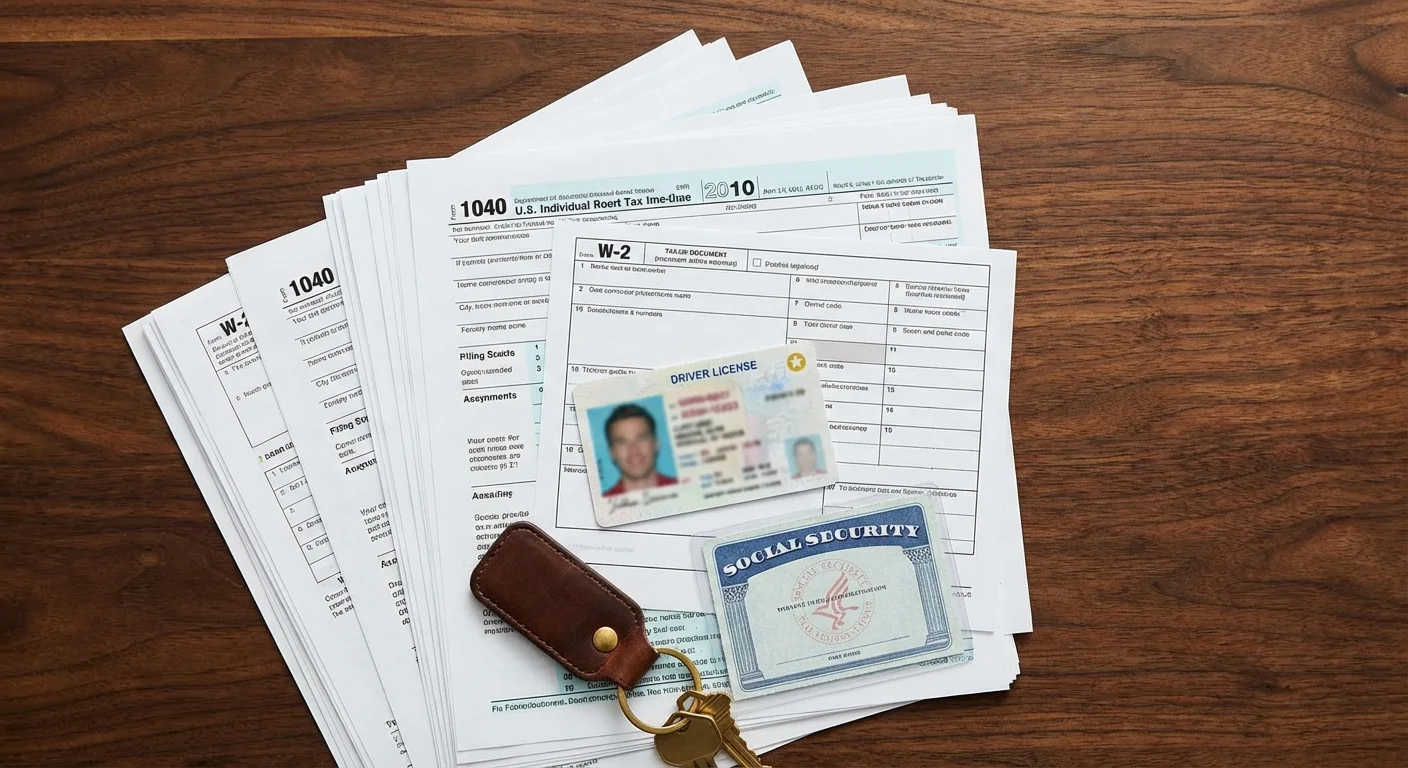
What You Need to Bring: A Checklist
Whether you are using a volunteer or filing online yourself, having your documentation organized prevents errors and ensures you get every deduction you deserve. Missing a single form can delay your refund by weeks or months.
Essential Documents:
- Proof of identity (Driver’s license, passport, or photo ID).
- Social Security cards or ITIN letters for yourself, your spouse, and all dependents.
- Birth dates for everyone listed on the return.
- Wage and earning statements: All W-2, 1099-R, and 1099-Misc forms.
- Interest and dividend statements from banks (Forms 1099-INT and 1099-DIV).
- A copy of last year’s federal and state returns (essential for verifying your identity for e-filing).
- Bank routing and account numbers for Direct Deposit (a voided check is best).
- Total amount paid for daycare and the daycare provider’s tax identifying number.
- Health insurance coverage information or Form 1095-A if you purchased insurance through the Marketplace.

What Can Go Wrong: Avoiding Common Pitfalls
Even with free services, errors can occur. Being proactive protects your refund and your legal standing with the IRS. Pay close attention to these common stumbling blocks.
The “Free” Bait and Switch: Many commercial tax sites use “Dark Patterns”—design choices intended to trick you into paying. They might offer a free federal return but then charge $60 for a state return, or they might charge you a “convenience fee” to pay the filing fee out of your refund. Avoid these by sticking strictly to the links found on IRS.gov.
Refund Anticipation Loans: Some commercial preparers offer “instant refunds” or “refund anticipation loans.” These are high-interest loans that can eat 10% to 30% of your refund in interest and fees. If you e-file and use direct deposit through a free service like VITA, the IRS typically issues your refund within 21 days anyway. There is no reason to pay a bank for a two-week “advance” on your own money.
Incorrect Bank Information: If you or your volunteer enters a single digit of your bank account or routing number incorrectly, your refund will be delayed. If the bank rejects the deposit, the IRS has to wait for the funds to return and then mail a paper check. Always double-check these numbers before hitting “submit.”

When to Consult a Professional
While VITA and Free File cover the vast majority of Americans, they are not designed for every situation. You should consider hiring a Certified Public Accountant (CPA) or an Enrolled Agent (EA) in the following scenarios:
- Business Complexity: If you own a business with employees, carry inventory, or have significant depreciable assets, these free programs may not provide the sophisticated tax planning you need.
- Rental Properties: While some VITA sites can handle basic rental income, complex real estate portfolios involving 1031 exchanges or specialized depreciation usually require a pro.
- Foreign Assets: If you have foreign bank accounts, overseas investments, or earn income in multiple countries, the reporting requirements (such as FBAR) are stringent and often fall outside the scope of volunteer programs.
- Legal Disputes: If you are currently under audit or owe significant back taxes that require an Offer in Compromise, a tax professional can provide the representation you need.

Maximizing Your Refund Through Credits
The goal of using free services isn’t just to save on the filing fee; it’s to ensure you receive the credits you are entitled to. Credits are more valuable than deductions because they reduce your tax bill dollar-for-dollar.
The Earned Income Tax Credit (EITC) is one of the most significant tools for financial security. For the 2024 tax year (filed in 2025), the credit can be worth up to $7,830 for a family with three or more children. Surprisingly, the IRS estimates that 20% of eligible taxpayers fail to claim this credit because they either don’t file or don’t know they qualify. VITA volunteers are specifically trained to identify EITC eligibility, even for those whose income is so low they aren’t technically required to file.
Similarly, the Child Tax Credit and the Child and Dependent Care Credit can provide thousands of dollars in relief. If you are a student or paying off student loans, ensure you or your preparer looks at the American Opportunity Tax Credit (AOTC) and the Lifetime Learning Credit (LLC).
Frequently Asked Questions
Is the VITA program really free?
Yes. VITA and TCE sites are prohibited from charging you any fees for their services. They are funded by IRS grants and supported by local non-profits. If a “volunteer” asks for a fee or a percentage of your refund, they are not part of the official VITA program, and you should report them to the IRS.
Can I use Free File if I am self-employed?
Yes, as long as your AGI is $79,000 or less. Most Free File software partners include the forms necessary for gig work, such as Schedule C (Profit or Loss from Business) and Schedule SE (Self-Employment Tax). This makes it a much better deal than the “Self-Employed” versions of commercial software, which can cost $100 or more.
What if I missed the April deadline?
IRS Free File remains available through mid-October for those who file for an extension. Some VITA sites also stay open through the summer (referred to as “out-of-season” sites), though their hours and locations are much more limited after April 15.
Can I file my state taxes for free too?
In many cases, yes. Most Free File providers offer free state returns if you meet their income criteria. Additionally, many states have their own “State Free File” programs or allow you to file directly on the state’s Department of Revenue website. If you are using VITA, they will almost always prepare your state return alongside your federal return at no cost.
Practical Next Steps
Taking control of your taxes is a major step toward financial independence. By using VITA or IRS Free File, you are making a choice to prioritize your own financial health over the profits of software giants. Start by gathering your documents into a dedicated folder or envelope today. Once you have your W-2s and 1099s in hand—usually by early February—visit the IRS website to choose the filing method that best suits your needs.
If you prefer a human touch, schedule your VITA appointment early. These slots fill up quickly, especially in February when many people are eager for their refunds. If you are comfortable with technology, set aside two hours on a quiet weekend to go through the Free File or Direct File software. You’ll likely find that with the guided interview questions, the process is much simpler than you feared.
This is educational content based on general financial principles. Individual results vary based on your situation. Always verify current tax laws, investment rules, and benefit eligibility with official sources.
Last updated: February 2025. Financial regulations and rates change frequently—verify current details with official sources.









Leave a Reply