The average American renter pays nearly 30 percent of their gross income toward housing costs; in high-cost-of-living areas, that figure frequently climbs toward 50 percent. When a significant portion of your paycheck vanishes before you even see it, the prospect of accumulating a five-figure or six-figure down payment feels like a mathematical impossibility. You are not just fighting against the cost of home prices; you are fighting against the erosion of your liquid capital by monthly rent obligations.
However, the path from renting to owning is rarely about a single windfall or a sudden inheritance. It is a process of systematic capital accumulation and strategic positioning. By shifting your mindset from “saving what is left over” to “engineering a surplus,” you can bridge the gap between your current apartment and your future front door. Use these five practical strategies to build your down payment fund without sacrificing your financial stability today.

1. Implement the “Artificial Mortgage” Method
The most effective way to prepare for homeownership is to live your life as if you already own the home. The “Artificial Mortgage” method serves two purposes: it accelerates your savings rate and stress-tests your future budget. Start by researching the total monthly cost of the home you want to buy, including the mortgage principal, interest, property taxes, homeowners insurance, and a maintenance buffer—often called PITI+M.
If your current rent is $1,800 but your projected homeownership cost is $2,600, you have an $800 gap. Instead of wondering if you can afford that higher payment, start “paying” it to yourself immediately. Set up an automatic transfer of $800 into a dedicated down payment account every month. If you can comfortably survive on the remaining income, you have proven that your future mortgage is sustainable. If you struggle, you have identified a budget problem before a bank holds your deed. After twelve months of this practice, you will have saved $9,600—a significant stride toward your goal.
This strategy aligns with the philosophy of taking control of your financial destiny. As Dave Ramsey often notes regarding the discipline of saving:
“Personal finance is about 20% head knowledge and 80% behavior.” — Dave Ramsey, Personal Finance Author and Broadcaster

2. Leverage Low-Down-Payment Programs and Grants
The “20 percent down” rule is the most persistent myth in the American real estate market. While a 20 percent down payment eliminates Private Mortgage Insurance (PMI) and reduces monthly payments, it is not a requirement for entry. For many first-time buyers, the opportunity cost of waiting three more years to save an extra $40,000 often outweighs the cost of the PMI itself.
Explore these common low-barrier entry points:
- FHA Loans: Backed by the Federal Housing Administration, these loans allow for down payments as low as 3.5 percent for borrowers with credit scores of 580 or higher.
- VA Loans: If you are a veteran or active-duty service member, you may qualify for a zero-down-payment loan through the Department of Veterans Affairs.
- USDA Loans: For homes in designated rural and suburban areas, the U.S. Department of Agriculture offers 100 percent financing to income-eligible buyers.
- Conventional 97: Many conventional lenders now offer programs requiring only 3 percent down for first-time buyers.
Beyond these national programs, state and local governments offer Down Payment Assistance (DPA) programs. These often take the form of “silent second” mortgages that are forgiven if you live in the home for a set number of years. You can search for specific programs in your area through the U.S. Department of Housing and Urban Development (HUD) website. Using a DPA grant can instantly shave years off your savings timeline.
Comparison of Common Down Payment Requirements
| Loan Type | Minimum Down Payment | Ideal For |
|---|---|---|
| Conventional (Standard) | 5% to 20% | Buyers with strong credit and high cash reserves |
| FHA Loan | 3.5% | Buyers with lower credit scores or smaller savings |
| VA Loan | 0% | Eligible veterans and service members |
| USDA Loan | 0% | Buyers in eligible rural or suburban locations |
| Conventional 97 | 3% | First-time buyers with good credit |
3. Optimize Your Cash Management with High-Yield Vehicles
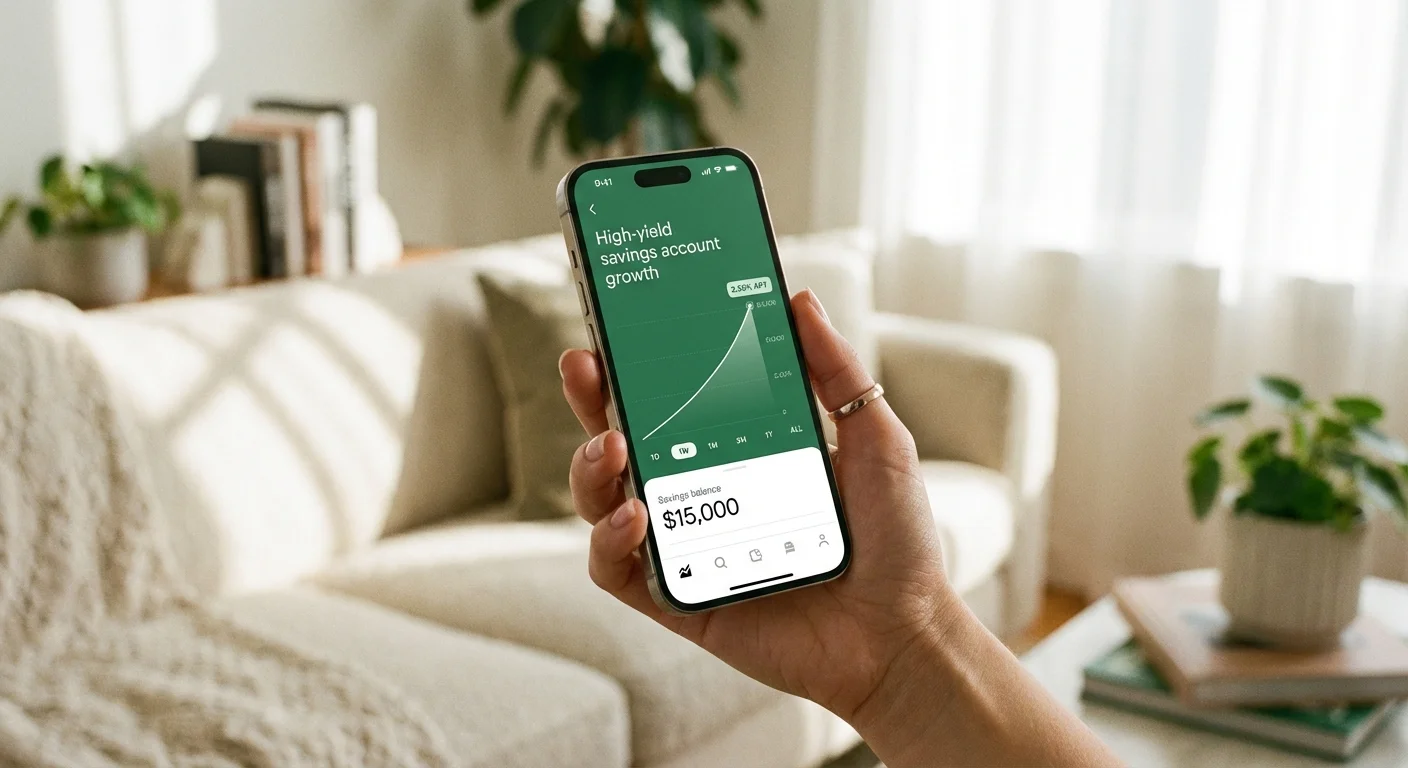
When you save for a house while renting, the “where” matters as much as the “how much.” If you leave your down payment in a standard big-bank savings account, you are likely earning less than 0.10% interest. Inflation will erode the purchasing power of your money faster than the bank can grow it. However, because you likely need this money within 1 to 5 years, you should avoid the volatility of the stock market.
Instead, move your down payment fund to a High-Yield Savings Account (HYSA) or a Money Market Account (MMA). These accounts, often offered by online banks, provide significantly higher interest rates while remaining FDIC-insured. If your timeline is firm—for example, you know you won’t buy for exactly 24 months—consider a Certificate of Deposit (CD) ladder. By staggering CD maturity dates, you lock in higher rates while maintaining periodic access to your cash.
This approach mirrors the “safety first” mentality advocated by legendary investors who prioritize capital preservation for short-term goals. John Bogle, the founder of Vanguard, emphasized the importance of minimizing costs and maximizing yield even in simple cash holdings.
“The miracle of compounding returns is overwhelmed by the tyranny of compounding costs.” — John Bogle, Founder of Vanguard
To find the best current rates for your down payment fund, you can consult resources like Bankrate or NerdWallet to compare FDIC-insured institutions. Even a 4% yield on a $30,000 fund generates $1,200 a year in “passive” down payment growth—money you didn’t have to work for.

4. Execute a Lifestyle “Arbitrage” to Increase Cash Flow
If your current rent is the primary obstacle to your down payment, you must change the variables of your housing equation. This is known as lifestyle arbitrage—intentionally lowering your current standard of living for a fixed period to accelerate a future goal. This is not a permanent sentence; it is a tactical retreat to gain a better vantage point.
Consider these three aggressive moves:
- The Roommate Strategy: Adding a roommate for the final 12 months of your savings journey can slash your rent and utility costs by 40 to 50 percent. If your rent is $2,000, bringing in a roommate for $1,000 a month puts $12,000 toward your house fund in a single year.
- The Downsize Move: If your lease is ending, move into a smaller, cheaper apartment or a slightly further neighborhood. If you can save $400 a month on rent by moving to a studio or an older building, that is $4,800 a year added to your down payment fund.
- The Geo-Arbitrage Play: If you work remotely, consider moving to a lower-cost-of-living area for a year. The difference in rent between a major metro and a mid-sized city can often fund a down payment in eighteen months.
While these choices require a temporary sacrifice in comfort, they represent the most direct way to increase your savings rate without needing a raise at work. You are effectively “trading” your current square footage for future equity.

5. Capture Windfalls and Automate “Found Money”
Most people treat “found money”—tax refunds, work bonuses, or cash gifts—as a license to splurge. To save for a house while renting, you must reclassify these windfalls as “equity injections.” The average American tax refund is approximately $2,800. If you commit that refund, a $1,000 work bonus, and three “extra” paychecks (from bi-weekly pay cycles) to your fund, you can easily accumulate $6,000 to $8,000 per year outside of your normal budget.
Direct your “found money” using these steps:
- Update your W-4: If you receive a massive tax refund every year, you are essentially giving the government an interest-free loan. Use the IRS Tax Withholding Estimator to adjust your withholdings so you receive more money in each paycheck. Put that extra monthly cash directly into your HYSA.
- Automate the Increase: Whenever you receive a raise, keep your lifestyle the same. Divert 100 percent of the pay increase into your down payment account. You won’t miss money you never got used to spending.
- Sell the Excess: Use the move to a new house as an excuse to declutter. Selling unused furniture, electronics, or clothing on secondary markets can often generate $500 to $2,000 for your fund while reducing your eventual moving costs.

Pitfalls to Watch For
Saving for a home is a marathon, and there are several obstacles that can derail your progress if you aren’t vigilant. Avoid these common mistakes during your accumulation phase:
Neglecting Your Credit Score: A lower credit score results in a higher interest rate, which can cost you tens of thousands of dollars over the life of the loan. Do not open new credit cards or take out an auto loan while you are saving for a house. Use resources from the Consumer Financial Protection Bureau (CFPB) to understand how your credit behavior impacts your mortgage eligibility.
Cashing Out Retirement Accounts: While the IRS allows first-time homebuyers to withdraw up to $10,000 from an IRA without the 10% penalty, this should be a last resort. You are sacrificing future compounded growth for a present-day asset. Ensure you have analyzed the long-term impact on your retirement security before tapping these funds.
Ignoring Closing Costs: Many renters save exactly 3.5% or 5% for a down payment, only to realize they need another 2% to 5% for closing costs. These include appraisals, inspections, title insurance, and loan origination fees. Always aim to save at least 7% to 10% of the home’s value to ensure you have enough for both the down payment and the “entry fees” of the transaction.

Getting Expert Help
While much of the saving process is a solo endeavor, certain scenarios require professional guidance to ensure you are making the most of your capital. Consider seeking expert help in the following situations:
- When your income is unconventional: If you are self-employed, a freelance contractor, or rely heavily on commissions, a Mortgage Broker can help you understand how lenders will view your income and what specific documentation you need to start gathering now.
- When your debt-to-income (DTI) ratio is high: A Certified Financial Planner (CFP) can help you decide whether it is more mathematically advantageous to pay down high-interest student loans or to continue stacking cash for a down payment.
- When you are navigating complex grants: A HUD-approved housing counselor can provide free or low-cost guidance on local down payment assistance programs that you might not find through a simple web search.
Frequently Asked Questions
Should I pay off all my debt before saving for a down payment?
Not necessarily. While high-interest debt (like credit cards) should be eliminated first, low-interest debt (like some student loans) may not prevent you from buying. Lenders look at your Debt-to-Income (DTI) ratio. If your total debt payments plus your future mortgage remain under 36% to 43% of your gross income, you may be able to save and pay off debt simultaneously.
Is it better to wait until I have 20% down?
This depends on the market. If home prices are rising by 5% annually and you are saving at a rate that only adds 2% to your down payment per year, you are losing ground. In many cases, it is better to buy with a smaller down payment and pay PMI for a few years than to be priced out of the market entirely.
How much should I keep in an emergency fund separate from my down payment?
You should never use your last dollar for a down payment. Aim to keep three to six months of living expenses in a separate account. Homeownership comes with unexpected repairs—a broken HVAC system or a leaking roof can quickly turn a dream home into a financial nightmare if your savings are depleted.
The transition from renter to homeowner is a journey of intentionality. By utilizing the “Artificial Mortgage” method, exploring assistance programs, and maximizing your cash yield, you turn the “if” of homeownership into a “when.” Start by opening a dedicated high-yield account today and naming it after your future home. This small psychological win creates the momentum you need to see the process through to the end.
This article provides general financial education and information only. Everyone’s financial situation is unique—what works for others may not work for you. For personalized advice, consider consulting a qualified financial professional such as a CFP or CPA.
Last updated: February 2026. Financial regulations and rates change frequently—verify current details with official sources.



Leave a Reply