
Why traditional secured cards are becoming a thing of the past—and what savvy spenders are using instead.

Let’s be honest: the American credit system can feel like it was designed to keep people out. It is the ultimate financial “chicken and egg” scenario. To get a credit card with decent terms, you need a good credit score. But to get a good credit score, you need a credit card to prove you are responsible.
For millions of Americans, this cycle is frustratingly hard to break. If you have no credit history—or if past mistakes have bruised your score—your options are usually limited to predatory lenders or traditional secured credit cards.
The traditional route usually looks like this: You apply for a card, face a “hard pull” on your credit (which drops your score further), and then you are required to lock away $200 to $500 of your hard-earned cash as a security deposit for a year or more. To add insult to injury, many of these cards still charge annual fees and sky-high interest rates.
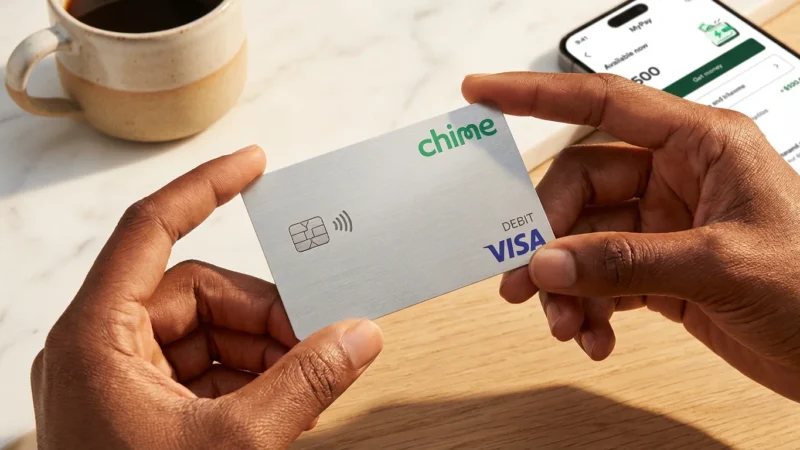
Fortunately, the financial technology landscape has shifted. There is a new way to build credit that doesn’t punish you for starting from scratch. Enter the Chime Credit Builder Visa® Credit Card.
A Different Approach to Credit Building
Chime is not a bank; it is a financial technology company that has partnered with banks (The Bancorp Bank, N.A. or Stride Bank, N.A.) to rethink how banking services work. Their approach to credit is simple: remove the barriers that stop people from improving their financial health.
The Chime Credit Builder card is designed specifically to help you build credit history without the anxiety of debt traps or approval rejections. Here is why it is quickly becoming the go-to tool for Americans looking to boost their FICO® Score.
1. No Credit Check to Apply
The scariest part of applying for a new card is the potential for rejection. With traditional cards, the application itself triggers a hard inquiry, which stays on your report for two years. If you are denied, your score takes a hit for nothing.
Chime does not perform a credit check to apply. They don’t look at your credit score to determine your eligibility. This makes it an incredibly accessible option for anyone looking for a fresh start or a first start.
2. No Interest and No Annual Fees
This is arguably the most significant differentiator. A standard no interest credit card is almost unheard of in the subprime or credit-building market. Traditional secured cards often carry variable APRs hovering around 19%, and unsecured cards for bad credit can go even higher.
The Chime Credit Builder card has 0% APR. Because you move your own money into the Credit Builder account to set your spending limit, you can never spend more than you have. This structure means Chime doesn’t need to charge interest. Additionally, there is no annual fee to keep the card open, saving you money while you build your history.
3. No Minimum Security Deposit
Most secured cards require a lump sum—often $200 minimum—to open the account. That is money you cannot touch for months. Chime takes a flexible approach.
There is no minimum security deposit required. You simply move money from your Chime Checking Account to your Credit Builder account. If you want your credit limit to be $50 for the week, you move $50. If you want it to be $500, you move $500. You are in total control of your limit, and you can use that money to make purchases immediately.
Chime vs. Traditional Cards: The Breakdown
It is easier to understand the value when you see the numbers side-by-side. Here is how Chime compares to the old-school methods of credit building.
| Feature | Chime Credit Builder | Traditional Secured Card |
|---|---|---|
| APR (Interest) | 0% (No interest) | ~19% Variable |
| Annual Fee | $0 | $0 – $59 |
| Credit Check | None | Hard Pull |
| Minimum Deposit | No Minimum | $200 – $500 |
How It Actually Boosts Your Score
You might be wondering: if I’m spending my own money, how is this credit? And how does it help my score?
Even though you are front-loading the funds, the Chime Credit Builder runs on the Visa® network. To the merchants, it looks like a credit card. More importantly, to the credit bureaus (Experian, TransUnion, and Equifax), it acts like a credit card that you are managing responsibly.
Chime reports your on-time payments to all three major credit bureaus. Payment history is the single most important factor in calculating your FICO® Score.
The “Hidden” Benefit: No Utilization Reporting
This is a technical detail that makes a massive difference. With a traditional secured credit card, if you have a $200 limit and you spend $100, your “credit utilization” is 50%. High utilization can actually hurt your credit score, even if you pay it off.
Chime works differently. Because the limit moves based on what you add, Chime does not report credit utilization to the bureaus. They only report your payment status. This protects your score from dropping just because you used your card for a large purchase.
The results speak for themselves. In a representative study conducted by Experian in January 2024, members who used Chime Credit Builder and made no late payments saw an average 30-point FICO® Score increase.
How to Get Started
Because Chime is a financial technology company focused on user experience, the sign-up process is refreshingly fast. It takes about 2 minutes to get started.
- Sign Up: Apply for a Chime Checking Account and the Credit Builder card. Remember, there is no credit check.
- Move Money: Transfer funds to your Credit Builder secured account. This money becomes your spending limit for the card.
- Spend: Use your card anywhere Visa is accepted—groceries, gas, bills, or online shopping.
- Automate: Turn on the “Safer Credit Building” feature. This automatically pays your monthly balance using the money you already moved into the secured account. This ensures you never miss a payment and always report “on time” to the bureaus.
As a bonus, being a Chime member unlocks other perks like access to over 47,000 fee-free ATMs, getting paid up to 2 days early with direct deposit, and SpotMe® fee-free overdraft protection on qualifying accounts.
Ready to build credit on your own terms?
No annual fees. No interest. No credit check.
Disclaimers:
Chime is a financial technology company, not a bank. Banking services and debit card provided by The Bancorp Bank, N.A. or Stride Bank, N.A., Members FDIC. Credit Builder card issued by Stride Bank, N.A.
Credit Builder: To apply for Chime Credit Builder Visa® Credit Card, you must have an active Chime® Checking Account.
Impact on Credit Score: On-time payment history can have a positive impact on your credit score. Late payment may negatively impact your credit score. Chime will report your activities to Transunion, Experian, and Equifax. Impact on your credit may vary, as Credit scores are independently determined by credit bureaus based on a number of factors including the financial decisions you make with other financial services organizations.
30-Point Increase: Based on a representative study conducted by Experian®, members who made their first purchase with Credit Builder between June 2022 and October 2023 observed an average FICO® Score 8 increase of 30 points after approximately 8 months. On-time payment history can have a positive impact on your credit score. Late payment may negatively impact your credit score.
SpotMe®: SpotMe eligibility requirements apply. Overdraft only applies to debit card purchases and cash withdrawals. Limits start at $20 and may be increased up to $200.
ATMs: Out-of-network ATM withdrawal fees may apply except at MoneyPass ATMs in a 7-Eleven, or any Allpoint or Visa Plus Alliance ATM.
Early Payday: Early access to direct deposit funds depends on the timing of the submission of the payment file from the payer. We generally make these funds available on the day the payment file is received, which may be up to 2 days earlier than the scheduled payment date.








Leave a Reply