
The average American wedding now costs approximately $35,000 according to industry data from 2023. For many couples, that figure represents a significant down payment on a home, several years of student loan payments, or a fully funded emergency savings account. Starting a marriage under a mountain of high-interest credit card debt creates unnecessary stress during what should be your “honeymoon phase.” You do not need to spend the equivalent of a mid-sized sedan to celebrate your commitment to your partner.
Planning a $5,000 wedding requires a shift in mindset—moving away from the “wedding industry complex” and toward a celebration focused on your personal values. It demands creativity, ruthless prioritization, and a willingness to challenge traditional expectations. This guide provides a blueprint for executing a memorable, stylish wedding that respects your financial boundaries while still feeling like the special occasion it is.

Establishing the $5,000 Framework
Before you look at a single dress or visit a venue, you must establish a firm spending cap. A $5,000 budget does not happen by accident; it requires a granular breakdown of every anticipated expense. When you operate with a limited pool of capital, every dollar spent on one category must be “stolen” from another. If you choose a more expensive dress, your floral budget must shrink. This is the reality of frugal wedding planning.
Consider this sample allocation for a 50-guest wedding. While your personal priorities may shift these numbers, this serves as a realistic baseline for a $5,000 budget:
| Category | Estimated Cost | Percentage of Budget |
|---|---|---|
| Venue & Permits | $600 | 12% |
| Food & Soft Drinks | $1,750 | 35% |
| Photography | $1,000 | 20% |
| Attire & Beauty | $500 | 10% |
| Decor, Flowers & DIY | $500 | 10% |
| Invitations & Misc. | $250 | 5% |
| Emergency Buffer | $400 | 8% |
This breakdown highlights a critical truth: the guest count is your primary budget lever. At $5,000, hosting 150 people is nearly impossible unless you opt for a “cake and punch” reception. Aiming for 40 to 60 guests allows you to provide a high-quality experience without overextending your resources.
“Stop buying things you don’t need, with money you don’t have, to impress people you don’t even like.” — Suze Orman, Personal Finance Expert
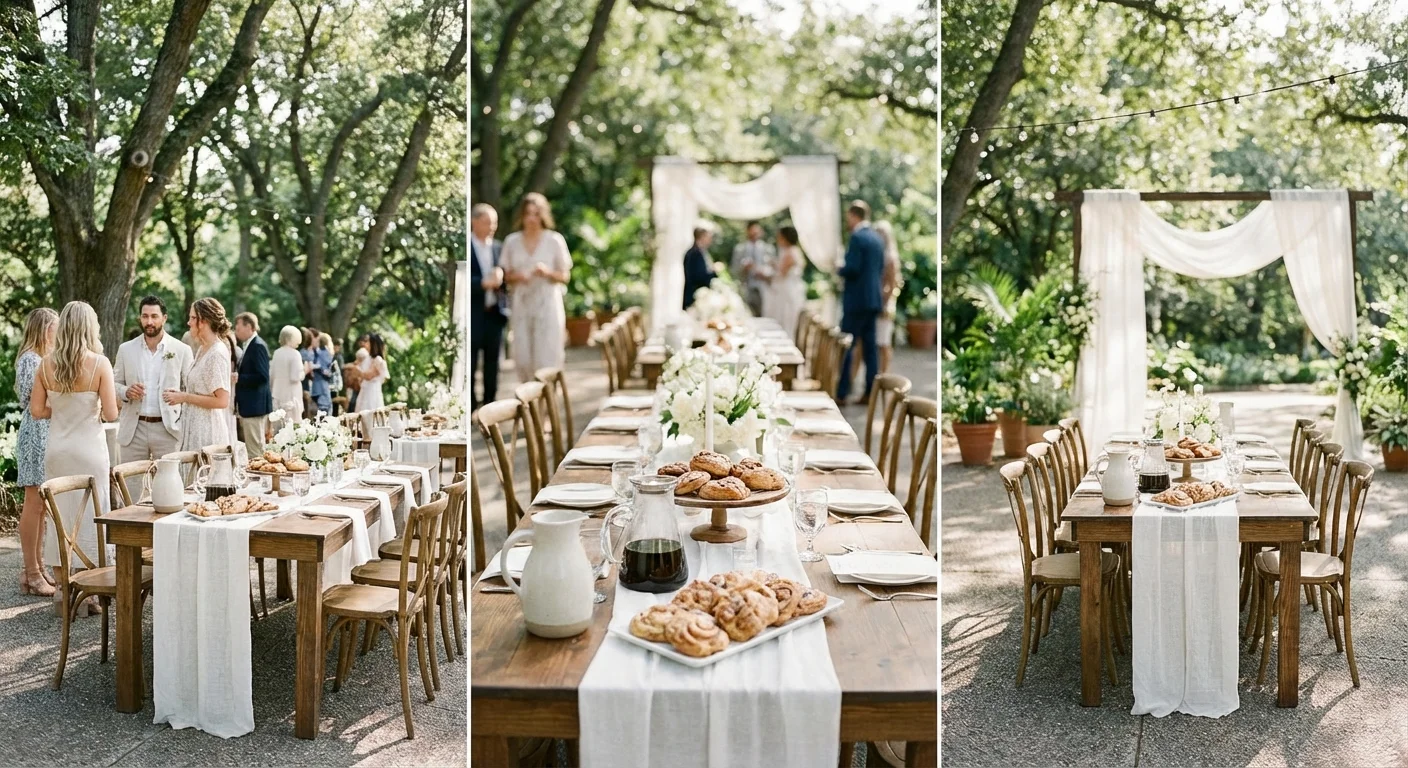
Strategy 1: Rethink the Venue and Timing
The venue often acts as the largest financial hurdle in wedding planning. Traditional “wedding factories”—venues designed specifically for ceremonies—often charge thousands just for the space, even before you add food or rentals. To stay under $5,000, you must look where others aren’t looking.
Public lands offer some of the most stunning backdrops for a fraction of the cost of a ballroom. National and state parks typically require a “Special Use Permit,” which often costs between $50 and $250. You can research these requirements on USA.gov or the specific state park website. A ceremony overlooking a canyon or nestled in a redwood grove provides natural beauty that requires zero additional decoration.
Timing also dictates price. Saturday evenings in June or September command premium rates. Consider a “Brunch Wedding” on a Sunday morning. Not only are venues cheaper to rent during off-peak hours, but brunch catering is significantly more affordable than a formal three-course dinner. Pancakes, mimosas, and gourmet coffee stations cost a fraction of beef tenderloin and an open bar—plus, guests generally expect a shorter, more relaxed celebration during daylight hours.
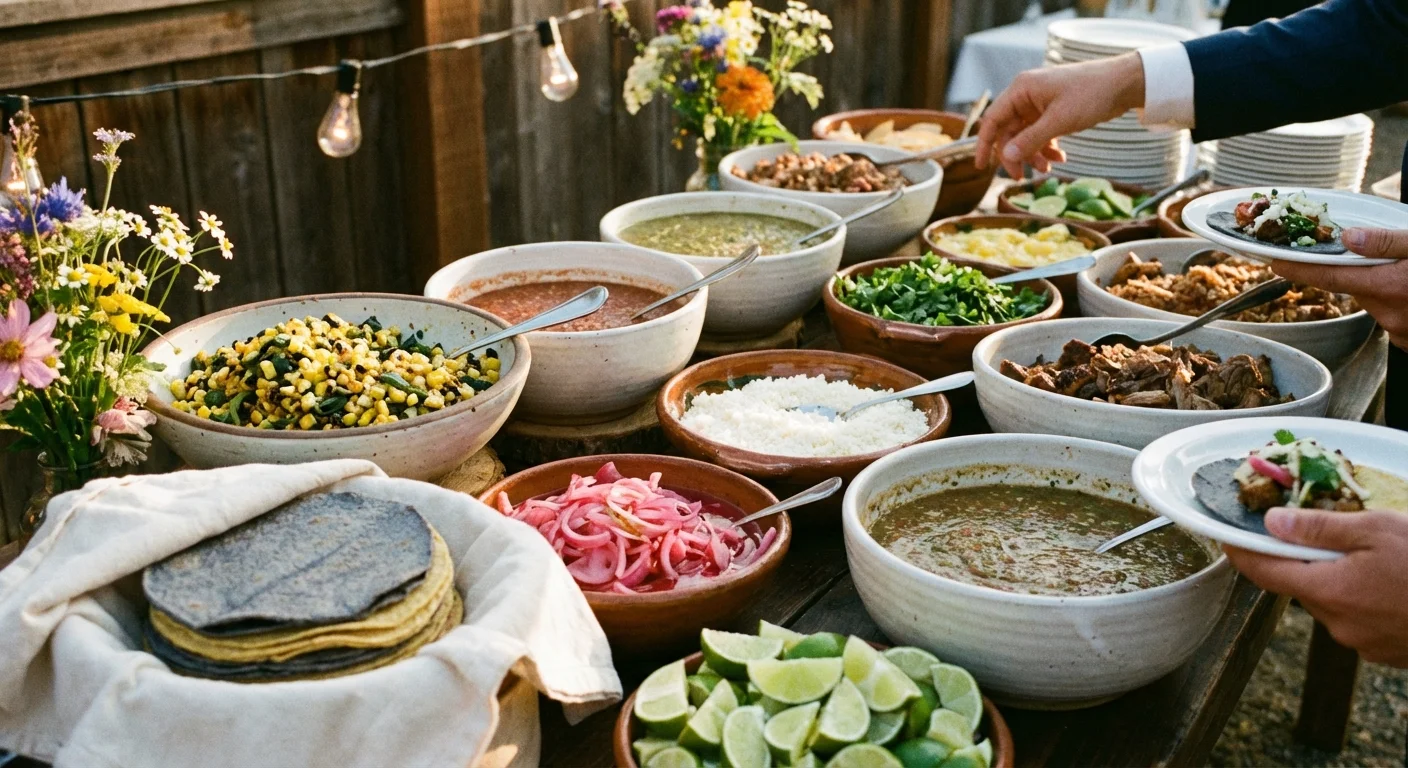
Strategy 2: Mastering the “Modified” Catering Model
Traditional wedding catering averages $75 to $150 per person. For 50 guests, that could easily consume your entire $5,000 budget. To beat these costs, you must bypass traditional wedding caterers. Instead, look to your favorite local restaurants. Many high-quality establishments offer “drop-off” catering or “buffet pans” that provide excellent food at a fraction of the cost.
A taco bar from a local authentic Mexican restaurant or a large-scale BBQ spread from a neighborhood favorite can feed 50 people for $1,000 to $1,500. This leaves room for high-quality disposable bamboo plates and napkins, which look elegant but save you from expensive rental and cleaning fees. If your venue allows it, purchasing your own alcohol from a wholesale club like Costco or Sam’s Club can save you 70% compared to venue-provided bar services. Stick to beer, wine, and one signature cocktail to keep costs low and logistics simple.
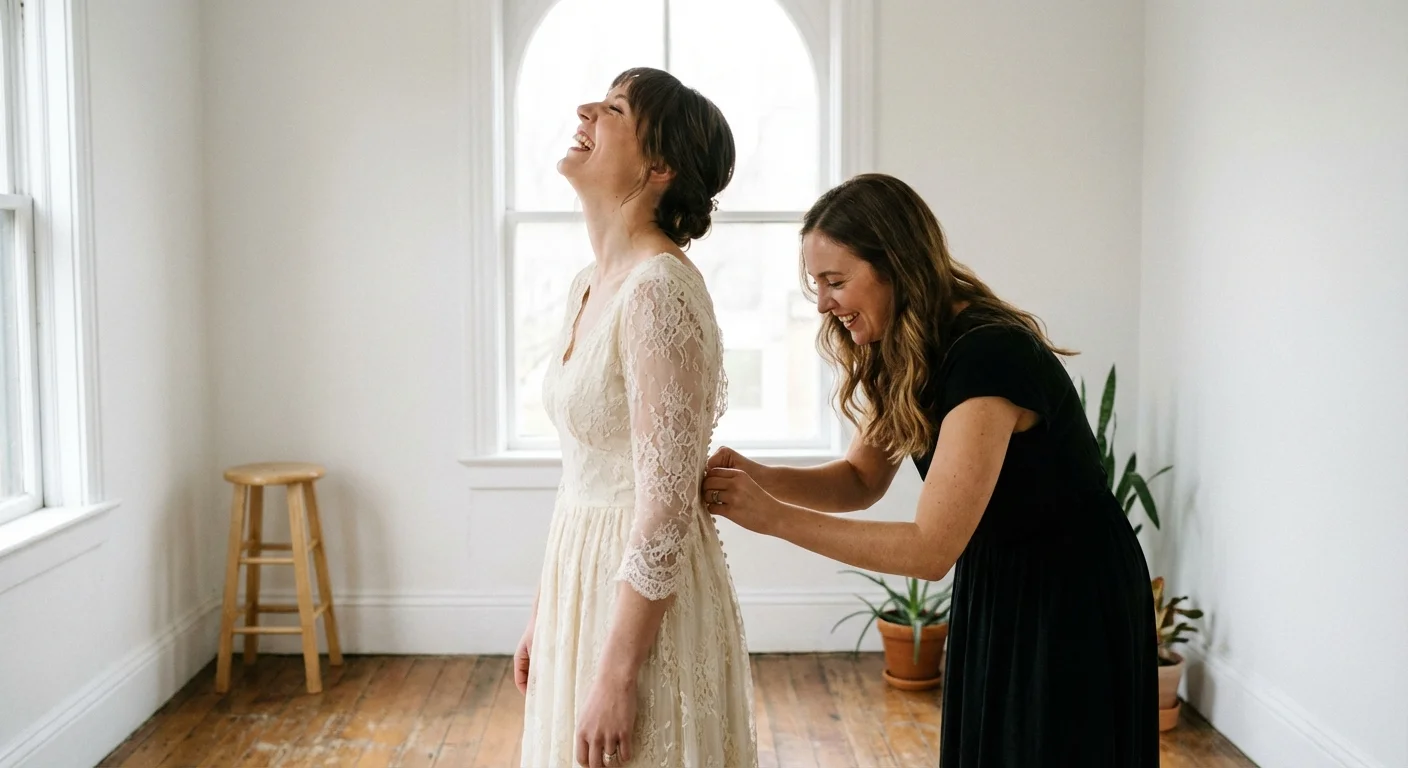
Strategy 3: Finding High-End Attire for Less
The pressure to spend $2,000 or more on a dress you will wear for eight hours is immense. However, the secondary market for wedding attire is booming. Sites like Stillwhite or Nearly Newlywed allow you to purchase designer gowns for 50% to 70% off retail prices. Many of these dresses are “sample” gowns or were worn once and professionally cleaned.
For the groom and wedding party, reconsider the traditional tuxedo rental. A well-tailored navy or charcoal suit is more versatile and often costs the same as a high-end rental. If you choose a casual outdoor venue, a clean dress shirt, vest, and chinos offer a timeless look that fits the budget perfectly. Focus on the fit—a $100 suit from a department store tailored for $50 will always look better than a $1,000 suit that hangs poorly.

Strategy 4: Photography Without the Premium
Photography is the one area where you should be cautious about cutting too deep—after all, these are the lasting records of the day. However, you don’t need a “top-tier” photographer for an 8-hour package. Many professional photographers offer “elopement” or “micro-wedding” packages that cover 3 or 4 hours of the day. This is usually enough to capture the ceremony, family portraits, and the first hour of the reception.
You can also look for “associate photographers.” These are talented individuals who work for larger studios but shoot their own weddings on the side to build their personal brands. They often possess the same high-end equipment and training as the lead photographer but charge significantly lower rates. Check portfolios carefully and ensure you have a clear contract before sending a deposit. For more on protecting your financial interests in contracts, the Consumer Financial Protection Bureau (CFPB) offers resources on consumer rights and agreements.
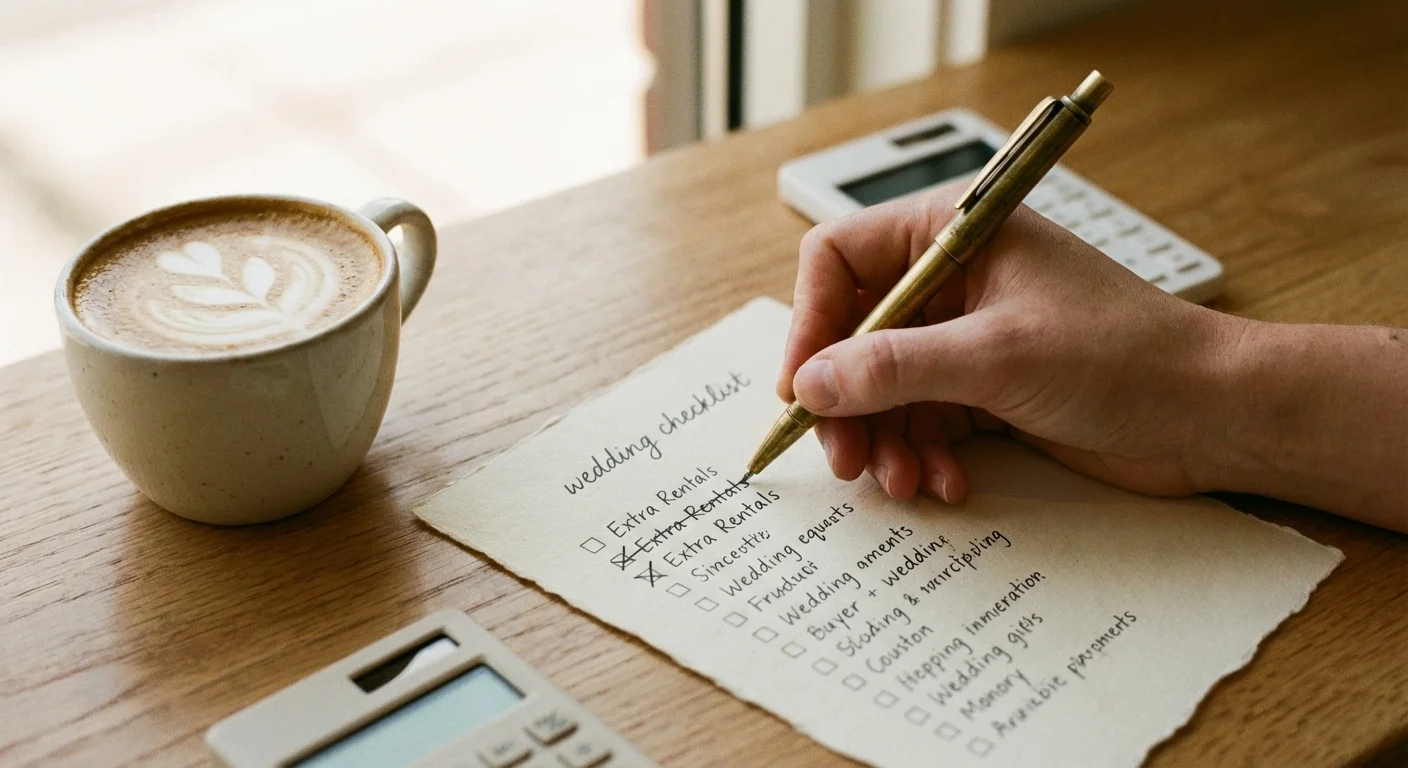
Pitfalls to Watch For
Even the most disciplined budget can be derailed by hidden costs that “creep” into the planning process. Being aware of these traps allows you to steer clear before they drain your emergency buffer.
- The “Wedding Tax”: Vendors often increase their rates the moment they hear the word “wedding.” When searching for photographers or bakers, ask for “event” pricing or “family portrait” rates first to see the baseline.
- Rental Fees: That $500 backyard venue seems like a steal until you realize you need to rent a tent, chairs, tables, a dance floor, and portable restrooms. These “extras” can easily total $2,000. Sometimes, a slightly more expensive restaurant back-room is cheaper because it already includes the infrastructure.
- Last-Minute Printing: Physical invitations, RSVP cards, and programs add up quickly with postage. Use digital invitations via platforms like WithJoy or Zola for the bulk of your guests. It is eco-friendly, budget-friendly, and makes tracking RSVPs much simpler.
- Alterations: A “cheap” dress can become expensive if it needs significant structural changes. Budget at least $150–$300 for professional tailoring, regardless of what you paid for the garment.

Professional Guidance: When to Seek Expert Help
While you can plan a $5,000 wedding yourself, your wedding is often the first major financial hurdle of your life together. It may be wise to consult a financial professional not for the wedding itself, but for the life that follows. Consider speaking with a professional in these scenarios:
- Merging Finances: If you and your partner have vastly different debt loads or income levels, a Certified Financial Planner (CFP) can help you create a unified household budget.
- Long-Term Goal Alignment: If choosing a $5,000 wedding is a strategic move to save for a home, an expert can help you optimize your savings vehicles, such as High-Yield Savings Accounts (HYSAs) or money market funds.
- Tax Implications: Marriage changes your tax filing status. Consulting a tax professional or visiting the Internal Revenue Service (IRS) website can help you understand how your withholding might need to change.
You can find qualified professionals through the Certified Financial Planner Board to ensure you are getting advice that serves your long-term interests.

Creative Flower and Decor Hacks
Floral arrangements are notoriously expensive because you are paying for both the perishables and the labor of a skilled artist. You can bypass this by using greenery rather than blooms. Eucalyptus, ferns, and ivy are significantly cheaper than peonies or ranunculus and create a lush, organic feel. Many couples now opt for “grocery store flowers.” Wholesale clubs like Costco sell bulk roses and hydrangeas that you can arrange yourself the morning of the wedding with the help of a few friends.
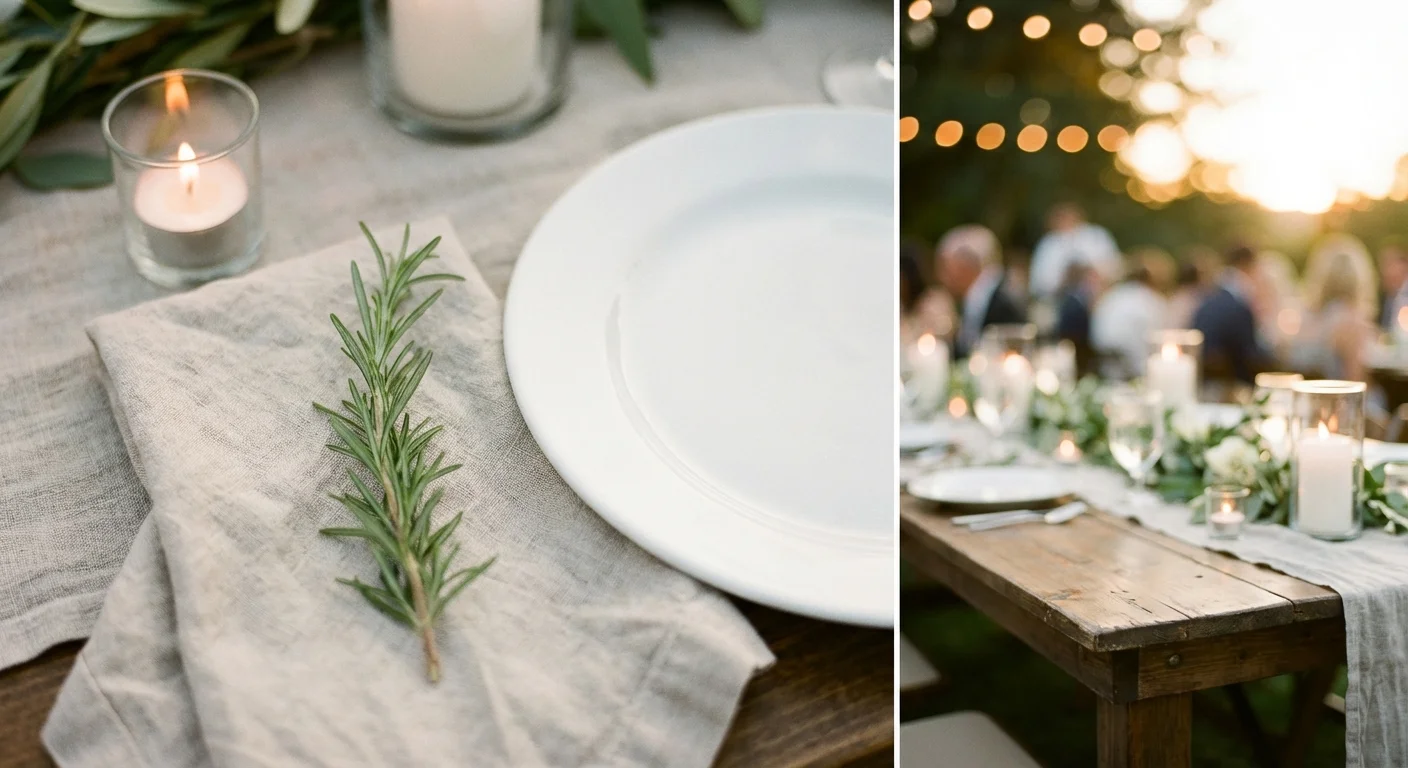
For decor, rely on lighting rather than objects. Strings of bistro lights or a multitude of inexpensive glass votive candles create a high-end atmosphere for very little money. Check local “buy nothing” groups or Facebook Marketplace in the months leading up to your date. Brides who just finished their weddings are often desperate to offload their vases, signs, and linens for pennies on the dollar.
“The individual investor should act consistently as an investor and not as a speculator.” — Benjamin Graham, The Intelligent Investor
Applying Graham’s wisdom to your wedding: invest in the experience and the relationship, but do not speculate that a more expensive party will lead to a happier marriage. Data often suggests the opposite; a study from Emory University found that couples who spent less on their weddings tended to have longer-lasting marriages.
Sample $5,000 Wedding Comparison
Understanding the difference between a traditional approach and a frugal approach helps clarify where the savings actually come from. Small shifts in every category create the massive $30,000 difference in total cost.
| Expense Item | Traditional Average | Frugal $5k Strategy | Your Savings |
|---|---|---|---|
| Venue Hire | $6,000 | $250 (Park/Public Space) | $5,750 |
| Catering (50 guests) | $5,000 | $1,200 (Restaurant Drop-off) | $3,800 |
| Photography | $3,000 | $1,200 (Short-day Package) | $1,800 |
| Wedding Gown | $2,000 | $400 (Second-hand/Sample) | $1,600 |
| Flowers | $2,500 | $300 (DIY/Greenery) | $2,200 |
| Total | $18,500 | $3,350 | $15,150 |

Managing the Guest List with Grace
The hardest part of a $5,000 wedding is the guest list. You cannot invite your parents’ coworkers or your third cousins. This requires “radical honesty.” Prioritize the people who have been active participants in your life over the last two years. If you haven’t spoken to someone in twelve months, they likely do not need to be at your 50-person celebration.
To avoid hurting feelings, keep your messaging consistent. If friends ask why they weren’t invited, a simple, “We’re hosting a very small, intimate ceremony to stay within our financial goals,” is usually enough. Most people will respect your desire for financial stability. Those who don’t are likely not the people you should be going into debt to impress anyway.

Finalizing the Details
As the date approaches, stay focused on the logistics that ensure the day runs smoothly. For a budget wedding, you are often the “project manager.” Create a detailed timeline and delegate specific tasks to trusted friends or family members. One person can be in charge of the music playlist, another can oversee the food delivery, and another can manage the cleanup. People generally love to help; giving them a specific “job” makes them feel like a part of your success.
The beauty of a $5,000 wedding isn’t just the money you save—it’s the intimacy you create. When you strip away the massive centerpieces and the five-tier cakes, you are left with the core of the event: two people making a promise to one another in front of their closest loved ones. That is something money cannot buy, and debt can only diminish.
Take the first step today by sitting down with your partner and listing your top three “must-haves.” Use those as your north star, and be willing to compromise on everything else. Your future self—the one who can afford a house, a stress-free vacation, or a solid retirement—will thank you for the restraint you show today.
This article provides general financial education and information only. Everyone’s financial situation is unique—what works for others may not work for you. For personalized advice, consider consulting a qualified financial professional such as a CFP or CPA.
Last updated: February 2026. Financial regulations and rates change frequently—verify current details with official sources.





Leave a Reply