
Most drivers treat their car insurance premium like a fixed utility bill—something to be paid and promptly forgotten until the next renewal notice arrives. However, sticking with the status quo is likely costing you hundreds of dollars every year. According to recent data from Bankrate, the average cost of full coverage car insurance has surged past $2,500 annually in many states, driven by rising vehicle repair costs and more frequent severe weather events. If you simply accept your renewal rate without a second thought, you are essentially leaving a “loyalty tax” on the table.
Negotiating a better rate does not require an aggressive personality or hours of phone calls. It requires an understanding of how insurance companies categorize risk and which specific levers you can pull to change their perception of you. In 2025, the insurance landscape has shifted; companies are increasingly using data-driven tools to personalize rates, and if you are not taking advantage of these modern metrics, you are likely overpaying for coverage you might not even need.

The Essentials: How to Win the Insurance Game
- Audit Your Policy Annually: Your life changes faster than your insurance policy does. A new job, a shorter commute, or a higher credit score can all lead to lower car insurance rates.
- Leverage Telematics: Modern “Pay-as-you-drive” programs offer some of the deepest discounts available today, often reaching 30% or more for safe drivers.
- Bundle with Strategy: Bundling home and auto is the standard advice, but look for smaller bundles—like renters or pet insurance—that might unlock the same discount tier.
- Ask for the Retention Department: If your rate goes up, your best leverage is speaking to someone authorized to offer “loyalty credits” to keep you from switching.

1. The “Invisible” Occupation and Education Discounts
Insurers look for patterns. Statistically, certain professions are involved in fewer accidents because of their schedules, work environments, or the level of risk-aversion required for their roles. If you have recently changed jobs or finished a degree, you must update your insurer immediately. You might find that moving from a high-stress retail environment to a steady office job or a teaching position triggers an automatic price drop.
Common professions that qualify for lower rates include educators, scientists, first responders, and engineers. Additionally, many insurers offer discounts for members of specific professional organizations or alumni associations. Even if you graduated twenty years ago, your alma mater might have a partnership with a major carrier that grants you a 5% to 10% discount. This is one of the easiest auto insurance discounts to claim because it usually only requires a single phone call to verify your status.
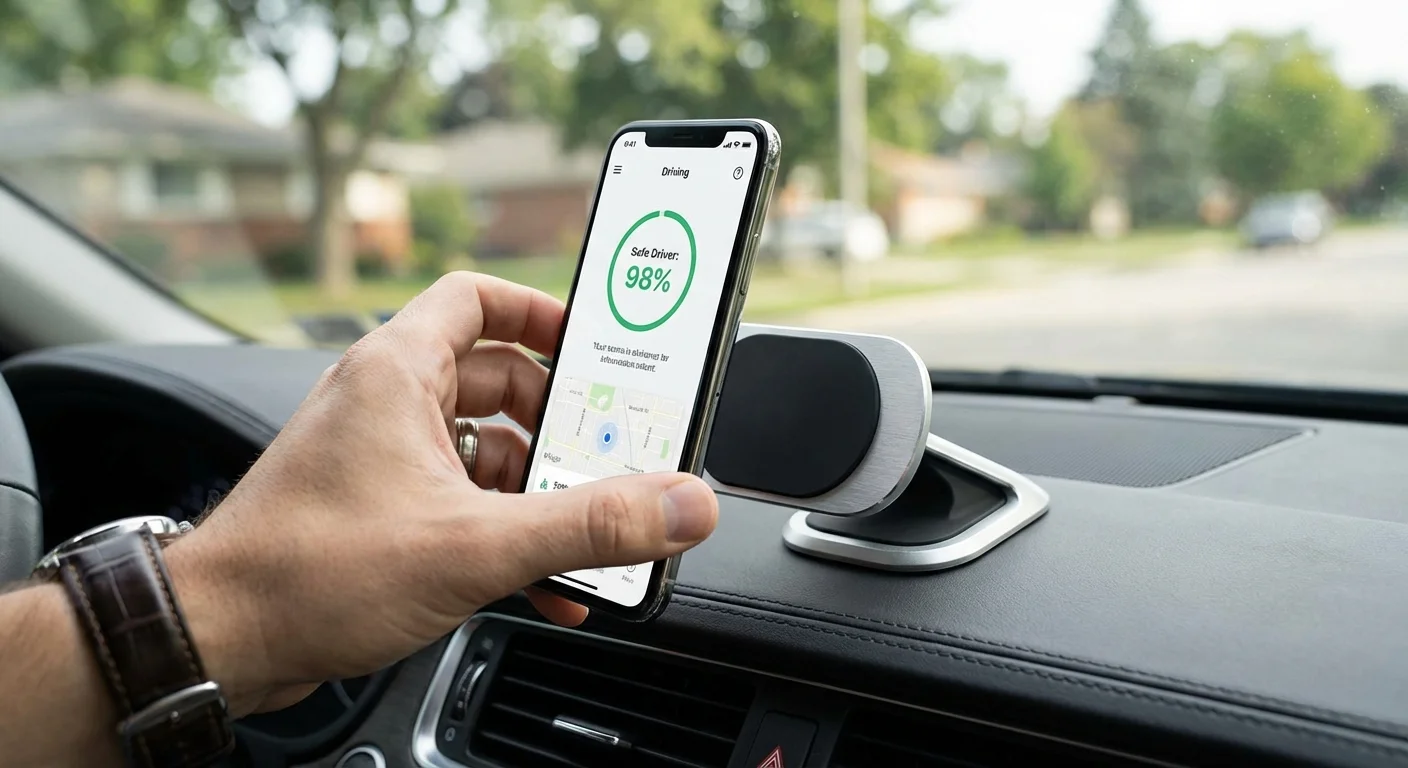
2. Telematics: Trading Privacy for Massive Savings
Telematics, or usage-based insurance (UBI), is no longer a niche product. In 2025, it has become a primary way for insurers to compete for low-risk drivers. These programs use a smartphone app or a small plug-in device to monitor your driving habits—specifically how hard you brake, how fast you accelerate, and what time of day you are on the road.
If you primarily drive during daylight hours and avoid aggressive maneuvers, telematics can slash your premium by significant margins. Some carriers offer an immediate 10% discount just for signing up, with the potential for total savings to reach 40% after a three-month monitoring period. For those who work from home or have a short, safe commute, this is the single most effective tool for car insurance negotiation. You are essentially providing the insurer with proof that you are a low-risk client, which removes the guesswork from their underwriting.
“It is not how much money you make, but how much money you keep, how hard it works for you, and how many generations you keep it for.” — Robert Kiyosaki, Personal Finance Author

3. The “Work-from-Home” Low Mileage Adjustment
The traditional commute has fundamentally changed for millions of Americans, yet many still have their policies set to the “standard” 12,000 to 15,000 miles per year. If you have transitioned to a hybrid or fully remote work schedule, your risk profile has dropped substantially. Fewer miles on the road means a statistically lower chance of an accident.
Check your policy’s mileage declaration. If you are driving fewer than 7,500 miles per year, you may qualify for a “low-mileage” discount. In some cases, switching to a per-mile insurance model—where you pay a small base rate plus a few cents for every mile driven—can save you over 50% compared to a traditional fixed policy. You can find more information on how mileage affects your financial risk at the Consumer Financial Protection Bureau (CFPB).

4. Professional and Affinity Group Affiliations
Membership has its rewards, and in the world of car insurance negotiation, those rewards come in the form of group discounts. Carriers often strike deals with large organizations to offer “affinity discounts” to their members. You should look through your current memberships for the following:
- Credit Union memberships
- AAA or other roadside assistance clubs
- Fraternal organizations or sororities
- Military service (active or veteran status)
- Labor unions or trade associations
Don’t assume your agent knows you are a member of these groups. When you call to negotiate, run through a list of your affiliations. Even a small 3% discount from a credit union membership adds up over several years.

5. Strategic Bundling Beyond Home and Auto
Every agent will tell you to bundle your home and auto insurance. It is the most common advice in the industry for a reason—it works. However, you can often achieve similar results by bundling smaller policies if you don’t own a home. If you have renters insurance, motorcycle insurance, or even life insurance with the same carrier, you likely qualify for a multi-policy discount.
In 2025, some companies are even offering discounts for bundling “untraditional” items, such as pet insurance or umbrella liability policies. The goal for the insurance company is “stickiness”—the more policies you have with them, the less likely you are to leave. Use this to your advantage. If you are considering a life insurance policy, ask your auto insurer for a quote first; the discount on your car insurance might effectively make the life insurance policy significantly cheaper or even “free” in terms of your total monthly cash flow.

6. Advanced Safety and Anti-Theft Verification
Your car likely has safety features you haven’t reported to your insurer. While basic features like airbags and anti-lock brakes are standard, newer technologies like lane-departure warnings, automatic emergency braking, and adaptive headlights can further lower car insurance rates. Furthermore, if you have installed an aftermarket anti-theft system or a vehicle recovery tracker (like LoJack), you deserve a discount.
The key here is verification. Don’t rely on the VIN (Vehicle Identification Number) to tell the whole story. Sometimes, specific trim levels or optional safety packages aren’t automatically flagged in an insurer’s system. Explicitly ask your agent to check for safety-tech discounts and provide documentation of any aftermarket security features you’ve added.

7. Billing and Administrative “Quick Wins”
Some of the most consistent discounts have nothing to do with your driving and everything to do with how you pay your bill. Insurers hate administrative overhead and the risk of a policy lapsing. You can often shave 5% to 10% off your total premium by opting into the following:
- Pay-in-Full: Paying the entire six-month or annual premium upfront eliminates “installment fees” and usually triggers a significant discount.
- E-Sign and Paperless: Opting out of physical mail saves the company money, and they pass those savings (typically $20-$50 per year) to you.
- Automatic Payments: Setting up an EFT (Electronic Funds Transfer) reduces the chance of a late payment, which insurers reward with a small, recurring discount.

Comparing the Impact: Estimated Discount Values
While every insurer uses a different algorithm, the following table provides a general idea of how much these discounts can impact your bottom line based on industry averages for 2025.
| Discount Category | Estimated Savings | Complexity to Implement |
|---|---|---|
| Telematics/Usage-Based | 15% – 40% | Moderate (Requires App/Device) |
| Multi-Policy (Bundling) | 10% – 25% | Easy |
| Low Mileage (<7,500 miles/yr) | 5% – 20% | Easy |
| Professional/Affinity Groups | 3% – 10% | Very Easy |
| Pay-in-Full | 5% – 10% | Easy (Requires Cash Flow) |
| Safety/Anti-Theft Tech | 2% – 10% | Moderate (Requires Verification) |

The Step-by-Step Negotiation Script
When you are ready to lower car insurance rates, do not just ask for a “better deal.” Be specific. Use the following strategy to guide your conversation with your insurance representative.
Step 1: Gather your data. Have your current declarations page, your annual mileage, and a list of any recent life changes ready. If you have a clean driving record for the last three years, that is your primary piece of leverage.
Step 2: Research the competition. Spend 15 minutes getting a quote from at least two other reputable carriers. You don’t necessarily want to switch, but you need to know your “market value.” Referencing a specific competitor’s lower price is much more effective than making a vague request for a discount.
Step 3: Make the call. Start with your current agent. Use a phrase like, “I’ve been a loyal customer for X years, but I’ve noticed my rates are creeping up while my driving has remained safe. I’ve received a lower quote elsewhere, but I’d prefer to stay with you if you can help me close the gap.”
Step 4: Go down the checklist. If the agent says they’ve “found all the discounts,” push back. Ask specifically: “Have we applied the low-mileage discount for my new work-from-home status? Are there any professional affiliations for my job? What about a loyalty credit for my tenure?”
Step 5: Ask for the Retention Department. If the front-line agent cannot help you, ask to speak with the “retention or cancellations department.” These representatives often have access to “special credits” or “account reviews” that regular agents do not.

What Can Go Wrong: Avoiding Common Pitfalls
While chasing discounts is vital, you must avoid compromising your actual protection. One of the biggest mistakes drivers make during car insurance negotiation is lowering their coverage limits to “state minimums” just to save a few dollars. If you are in a serious accident, a state-minimum policy could leave you personally liable for tens of thousands of dollars in medical bills or property damage.
Another pitfall is the “Loyalty Trap.” Some insurers use an algorithm called “price optimization.” This tracks how likely you are to shop around. If the data suggests you are a “loyalist” who never compares prices, the company may slowly increase your rates over time, assuming you won’t notice or leave. The only way to combat this is by shopping your rate every 12 to 18 months—even if you are happy with your current provider.
“Price is what you pay. Value is what you get.” — Warren Buffett, Chairman of Berkshire Hathaway

When to Consult a Professional
While most people can handle car insurance negotiation on their own, there are specific scenarios where you should seek the help of an independent insurance agent or a financial advisor:
- High Net Worth Situations: If you have significant assets to protect, you may need an “umbrella policy” that coordinates with your auto coverage to prevent lawsuits from wiping out your savings.
- Significant Life Changes: If you are getting married, buying a multi-unit property, or starting a business where you use your personal vehicle for commercial purposes, the complexity of your risk increases.
- Multiple Violations or Accidents: If your driving record is “non-standard,” an independent agent can access specialized markets that aren’t available to the general public.
You can find certified experts through the Certified Financial Planner Board to ensure your insurance strategy fits into your broader financial plan.
Frequently Asked Questions
Does my credit score really affect my car insurance rate?
In most states, yes. Insurers use a “credit-based insurance score” to predict the likelihood of a claim. If you have improved your credit score by paying down debt or fixing errors on your report, notify your insurer. This can often lead to a lower tier of pricing that has nothing to do with your driving record.
Can I negotiate my rate mid-policy, or do I have to wait for renewal?
You can negotiate or switch providers at any time. If you find a better deal or qualify for a new discount, you do not have to wait. If you have pre-paid your premium, your current insurer is legally required to refund the unused portion of your payment (minus a small “short-rate” cancellation fee in some cases).
Is a higher deductible always a good idea?
Increasing your deductible from $500 to $1,000 can lower your premium by 15% to 30%. However, you should only do this if you have an emergency fund capable of covering that $1,000 out-of-pocket expense. Using a high-deductible strategy is a form of self-insurance that works best for disciplined savers.
Will my rates go down automatically when I turn 25?
While 25 is a common benchmark for lower rates, it is rarely automatic. You must call your insurer to ensure they have updated your age bracket and adjusted your premium accordingly. Don’t wait for them to do it for you.
Taking the Next Step Toward Savings
Reducing your car insurance premium is one of the fastest ways to increase your monthly cash flow without changing your lifestyle. By systematically applying these seven discounts and approaching your insurer with a negotiation mindset, you can likely save $300 to $800 per year. Take thirty minutes this week to review your policy, gather a competing quote, and call your agent. The math is simple: a thirty-minute phone call that saves you $500 is the equivalent of earning $1,000 an hour. That is a return on investment that even the best stock market years struggle to beat.
For more help managing your household budget or understanding your consumer rights, visit USA.gov for a directory of financial assistance and consumer protection resources.
The information in this guide is meant for educational purposes. Your specific circumstances—including income, debt, tax situation, and goals—may require different approaches. When in doubt, consult a licensed professional.
Last updated: February 2025. Financial regulations and rates change frequently—verify current details with official sources.







Leave a Reply