
Last updated: February 2026. Financial regulations and rates change frequently—verify current details with official sources.
You are standing in a dimly lit veterinary clinic at 2:00 AM. Your golden retriever just swallowed a sock, or perhaps your tabby cat is suddenly lethargic and refusing to eat. The technician hands you a clipboard with a treatment estimate. The bottom line reads $1,800—just for the diagnostics and initial stabilization. This is the moment when financial planning transitions from a spreadsheet exercise to a life-or-death decision.
For many Americans, a $1,000 emergency is enough to trigger a financial crisis. According to data from the Federal Reserve, a significant portion of adults would struggle to cover an unexpected $400 expense with cash or its equivalent. When you add a pet to your household, you essentially add a family member who cannot tell you where it hurts and whose medical care costs are rising faster than general inflation. A dedicated pet emergency fund is no longer a luxury—it is a fundamental pillar of responsible pet ownership.
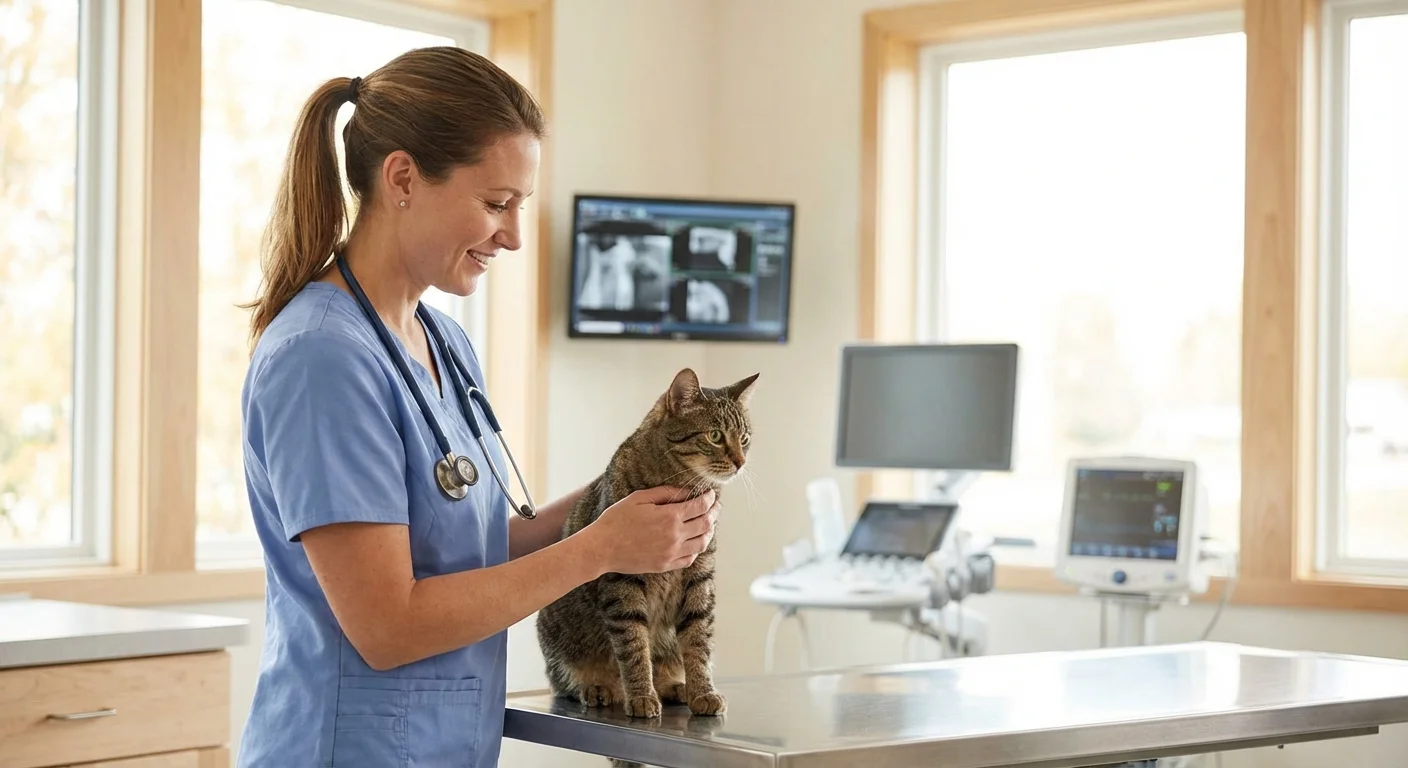
The Rising Reality of Veterinary Costs
The cost of keeping your pets healthy has surged over the last decade. While basic annual exams might only set you back $100 to $200, emergency care operates on a different scale entirely. Modern veterinary medicine offers incredible advancements—from MRI scans to specialized oncology—but these capabilities come with a high price tag. Veterinary clinics face the same inflationary pressures as human hospitals, including rising labor costs for skilled technicians and the skyrocketing price of specialized equipment.
If your pet requires an emergency visit, you typically face an immediate “triage fee” or emergency exam fee, which often ranges from $150 to $250 just to walk through the door. From there, the costs escalate quickly:
- Diagnostic Bloodwork: $200 – $400
- Digital X-Rays: $300 – $500
- Ultrasound: $400 – $600
- Overnight Hospitalization: $600 – $1,500 per night
- Emergency Surgery (e.g., foreign body removal): $2,500 – $5,000
When you aggregate these numbers, the $2,000 benchmark for a pet emergency fund begins to look like a minimum requirement rather than a generous cushion. Having this cash readily available allows you to focus on your pet’s recovery instead of doing “credit card math” in the waiting room.

Why $2,000 Is the Magic Number
You might wonder why $2,000 is the suggested target. Financial experts often suggest a general emergency fund of three to six months of living expenses. However, a pet’s needs are binary; they are either fine, or they are in a crisis that requires immediate intervention. A $2,000 safety net covers the vast majority of non-specialized emergency interventions. It handles the “middle ground” of pet crises—the broken leg that needs a splint and sedation, the severe allergic reaction, or the acute bout of pancreatitis that requires 48 hours of IV fluids.
While $2,000 won’t cover a $10,000 hip replacement or long-term chemotherapy, it buys you the most important thing in an emergency: time. It gives you the capital to stabilize your pet so you can make informed decisions about long-term care without the immediate threat of economic euthanasia.
“A big part of financial freedom is having a heart that is not afraid. When you have an emergency fund, you are not afraid of the ‘what ifs’ because you have prepared for them.” — Suze Orman, Personal Finance Expert

The Essentials: How to Build Your Pet Safety Net
Building a $2,000 fund from scratch feels daunting when you are already balancing a mortgage, car payments, and groceries. However, breaking it down into actionable phases makes the goal attainable. Use these strategies to build your fund efficiently:
- Automate a “Pet Tax”: Treat your pet’s savings like a recurring bill. Setting up an automatic transfer of $40 per week into a dedicated high-yield savings account will get you to your $2,000 goal in exactly one year.
- Redirect Found Money: Use tax refunds, birthday gifts, or work bonuses to seed the account. If you receive a $500 tax refund, depositing it immediately into the pet fund puts you 25% of the way to your goal instantly.
- Sell the Unused: Most households have at least $500 worth of unused electronics, clothing, or furniture. Spend one weekend listing these items on secondary markets to give your pet fund an initial boost.
- Audit Your Pet Spending: Look at your current recurring costs. Are you paying for a premium kibble that your vet says is unnecessary? Are you buying toys every month that end up shredded in minutes? Redirecting $20 a month from “wants” to the “emergency needs” fund adds up over time.

Pet Insurance vs. Savings: A Strategic Comparison
A common debate among pet owners is whether to buy insurance or simply “self-insure” by saving. In truth, the most robust financial strategy often involves a combination of both. However, understanding the mechanics of each is vital for your budget.
Pet insurance works on a reimbursement model. You pay the vet upfront, and the insurance company pays you back later—minus your deductible and co-pay. This means even with insurance, you still need liquid cash to cover the initial bill. A pet emergency fund bridges the gap between the vet’s invoice and the insurance company’s direct deposit.
| Feature | Pet Insurance | Dedicated Savings Fund |
|---|---|---|
| Cost | Monthly premiums (varies by age/breed) | The amount you choose to save |
| Availability | Subject to waiting periods and exclusions | Instant access to cash |
| Pre-existing Conditions | Generally not covered | Covered (it’s your money) |
| Long-term Value | Protects against $10,000+ catastrophes | Earns interest in a savings account |
| Usage | Best for major surgeries/accidents | Best for diagnostics and smaller emergencies |
For most pet owners, the ideal setup is a high-deductible insurance plan paired with a $2,000 emergency fund. The fund covers the deductible and the initial costs, while the insurance provides a ceiling on your total financial exposure if things get truly expensive.

Where to Park Your Pet Emergency Fund
You should not keep your pet emergency fund in your primary checking account. If the money is visible every time you check your balance, you will be tempted to use it for “human” emergencies or discretionary spending. Instead, open a separate high-yield savings account (HYSA). These accounts currently offer significantly higher interest rates than traditional big-box banks, allowing your pet’s money to grow while it sits idle.
Look for an account with no monthly fees and no minimum balance requirements. Many online banks allow you to “bucket” your savings, so you can have a specific sub-account labeled “Fido’s Emergency Fund.” This psychological barrier helps you view that money as “spent” and reserved strictly for veterinary crises. You can find updated rates and reviews of these accounts on resources like Bankrate or NerdWallet.

What Can Go Wrong: Common Pitfalls
Even with the best intentions, pet owners often make mistakes that leave them vulnerable during a crisis. Avoiding these pitfalls will ensure your safety net remains intact when you actually need it.
1. Using the fund for routine care: Your emergency fund is not for annual vaccinations, heartworm prevention, or dental cleanings. These are predictable, recurring expenses. If you dip into the $2,000 for a routine $300 dental exam, you are leaving yourself exposed for a true emergency. Budget for routine care as part of your monthly living expenses, not your emergency fund.
2. Failing to account for multiple pets: A $2,000 fund is a great start for one pet. However, if you have three dogs and two cats, that $2,000 will vanish quickly if a communicable illness hits the household. Aim for $2,000 for the first pet and at least $1,000 for each additional pet.
3. Ignoring “Economic Euthanasia”: It is a heartbreaking reality, but many people have to put their pets down because they cannot afford a few thousand dollars in treatment. Don’t wait until the crisis happens to find out you can’t afford the cure. If you cannot reach the $2,000 goal quickly, look into secondary options like CareCredit or scratchpay, but be wary of their high interest rates if not paid off within the promotional period.
4. Forgetting to replenish: If you use $500 from the fund for a minor emergency, your top priority should be getting that balance back to $2,000 immediately. An emergency fund is a revolving door; it is meant to be used, but it must be maintained.

When to Consult a Professional
Navigating pet finances involves more than just saving; it requires professional perspective to ensure you aren’t overspending or under-preparing.
- Consult Your Veterinarian: Ask your vet for a realistic “worst-case scenario” estimate based on your pet’s breed and age. For example, if you own a Great Dane, ask about the cost of GVD (bloat) surgery in your area. This helps you tailor your $2,000 goal to your specific reality.
- Consult an Insurance Broker: If you are overwhelmed by pet insurance options, a broker can help you compare policies based on your budget. They can explain “benefit caps” and “reimbursement percentages” to ensure you don’t buy a policy that offers no real protection.
- Consult a Financial Counselor: If you are struggling with high-interest debt and feel you cannot afford to save for your pet, organizations like the National Foundation for Credit Counseling can help you restructure your budget to find the “pet tax” you need.

How to Lower the Cost of Emergency Care
While the emergency fund is your primary shield, you can also take proactive steps to ensure those funds go further. Managing veterinary costs doesn’t always mean sacrificing care; it often means being a savvy consumer.
First, always ask for a tiered estimate. Most emergency vets will provide a “high” and “low” estimate. Ask the vet which tests are absolutely essential for stabilization and which can wait 24 hours until your regular (and likely cheaper) vet is open. For example, if your pet is stable but needs monitoring, you might be able to transfer them from an expensive 24-hour trauma center to your local family vet the following morning.
Second, consider generic medications. Just like human medicine, many pet prescriptions have generic equivalents. Ask your vet if they can provide a written prescription that you can fill at a local pharmacy or through a reputable online retailer like Chewy or 1-800-PetMeds. This can often save you 50% or more on the cost of medications compared to buying them directly from the clinic.
FAQs About Pet Emergency Funds
How much should I save if my pet is already a senior?
Senior pets are statistically more likely to face health crises. If your pet is over the age of eight (for dogs) or ten (for cats), you should aim to increase your fund closer to $3,000 or $4,000. Chronic conditions like kidney disease or arthritis can lead to acute episodes that require frequent stabilization.
Is it better to use a credit card or a savings fund?
A savings fund is always superior because it doesn’t carry interest. If you put a $2,000 vet bill on a credit card with a 20% APR and only pay the minimum, you could end up paying nearly double for that one vet visit over time. Use the savings first; use credit only as a last resort.
Should I still get pet insurance if I have $2,000 saved?
Yes. $2,000 is for the “expected unexpected”—the common emergencies. It will not cover a $7,000 surgery for a torn ACL or months of cancer treatment. Think of the $2,000 as your “liquidity” and insurance as your “catastrophic protection.”
What if I can’t afford to save $40 a week?
Start smaller. Even $5 or $10 a week is better than nothing. The goal is to build the habit of setting money aside for your pet. Over time, as your income grows or your expenses drop, you can increase the amount. The Consumer Financial Protection Bureau offers excellent resources on how to start a small savings habit that sticks.
Taking the First Step Toward Financial Peace
Building a pet emergency fund is an act of love. It removes the element of panic from a situation that is already emotionally charged. When you know the money is there, sitting in a high-yield account, you can give your pet the best possible chance at a long, healthy life without compromising your own financial future.
Start today by opening that separate savings account. Name it after your pet. Move your first $25 into it. You are not just saving money; you are buying the ability to say “yes” to life-saving care when every second counts. Your dog or cat depends on you for food, shelter, and affection—and now, they depend on your financial foresight, too.
This is educational content based on general financial principles. Individual results vary based on your situation. Always verify current tax laws, investment rules, and benefit eligibility with official sources.






Leave a Reply